
Late March 2026 Monarch Migration Update: Spotting First Eggs, Early Caterpillars, and Your Weekend “Raise & Release” Starter Guide
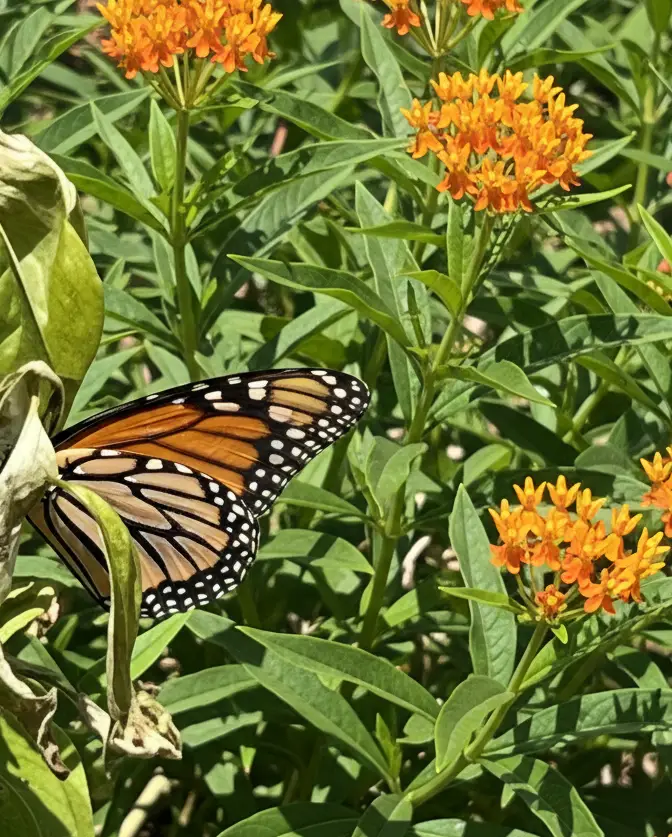
As the spring migration advances into its later March phase, the vanguard of overwintering monarchs continues to push northward through Texas and into adjacent regions such as Northwest Louisiana. Recent data indicate a robust start to the 2026 season, with the eastern population occupying approximately 4.42 acres of overwintering habitat in Mexico—a significant increase from the prior year. Massive departures from sanctuaries such as El Rosario and Sierra Chincua occurred around early to mid-March, following favorable conditions of warm temperatures and gentle winds. In the DFW metroplex and surrounding areas, including Richardson, Texas, observers are now reporting not only nectaring adults but also the initial signs of local reproduction: females depositing eggs on milkweed and the appearance of tiny first-instar caterpillars.

This transition marks a pivotal moment for citizen scientists and gardeners along the central flyway. The overwintering “super-generation” adults are actively mating and laying eggs as they move, producing the first new generation of 2026. These offspring will carry the migration farther north in the coming weeks. For residents in North Texas and Northwest Louisiana, the weekend of March 22–23 presents an excellent opportunity to observe these developments firsthand and take concrete steps to support the population through habitat enhancement and, where appropriate, supervised rearing.

Regional Sightings Snapshot

Citizen-science platforms, including Journey North and Monarch Watch, reflect increasing activity in Texas, with confirmed sightings concentrated in southern and central areas, including locales near Euless and the broader Dallas-Fort Worth region. Reports describe monarchs nectaring on early-blooming plants and ovipositing on emerging milkweed patches. In Louisiana, nectar corridors along migration routes are facilitating similar movements, with arrivals aligning closely with those in Texas.

As of mid-to-late March, the wave has progressed sufficiently for local breeding to begin in warmer microclimates. Readers in the Richardson area and vicinity may encounter females actively searching for host plants during sunny periods. I encourage you to check real-time maps on Journey North or Monarch Watch for the latest pins and to submit your own observations—including date, approximate location, number of monarchs, and behaviors such as nectaring, resting, or egg-laying. Your contributions directly inform migration tracking and conservation modeling.

Identification Guide: Eggs, Tiny Caterpillars, and Ovipositing Females

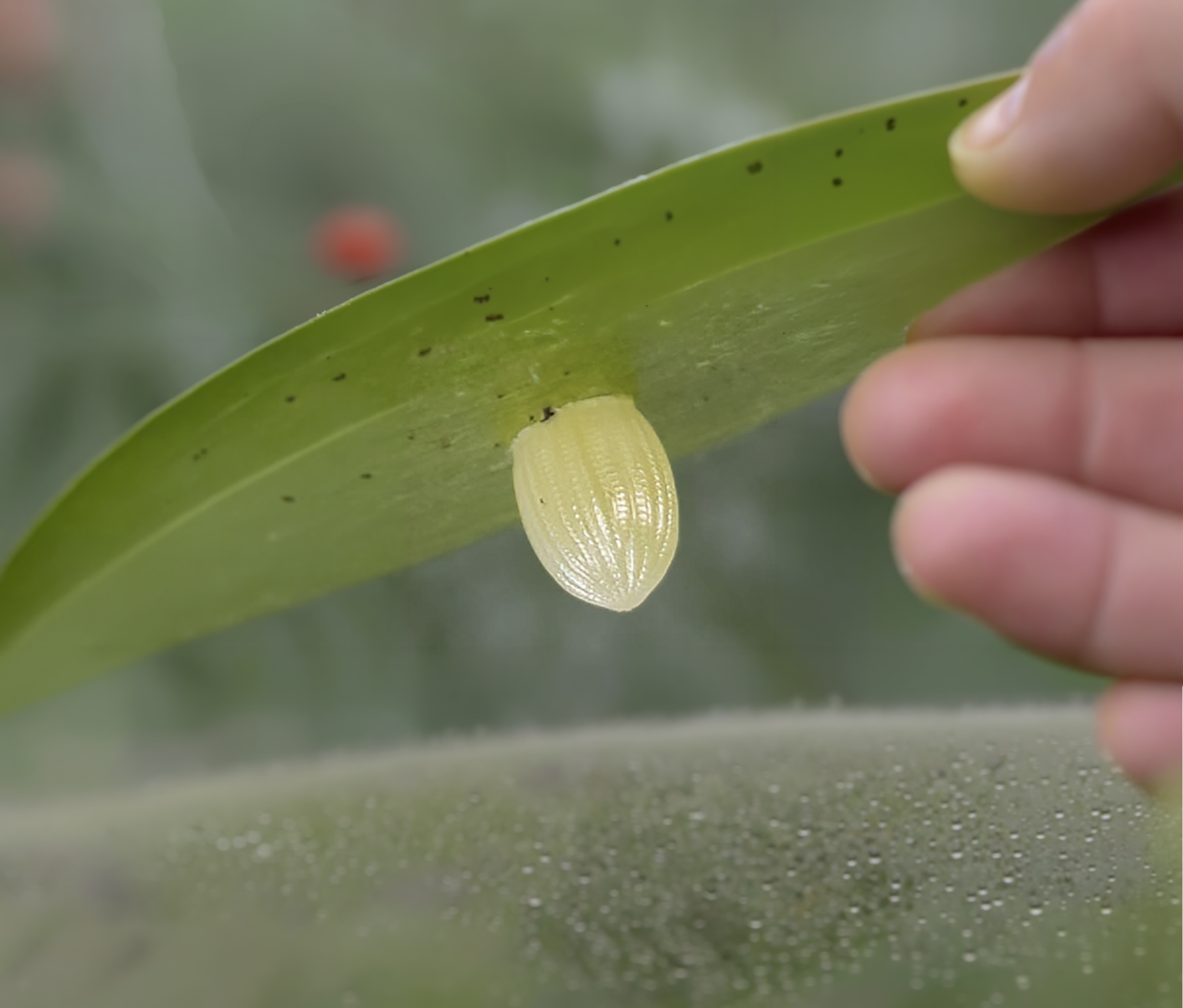
**Eggs**: Monarch eggs are small (approximately the size of a pinhead), cream to pale yellow, and distinctly ridged or ribbed. Females typically deposit them singly on the underside of milkweed leaves, often near the tips or tender new growth. Look for these during morning or late-afternoon inspections when light highlights their translucent appearance.
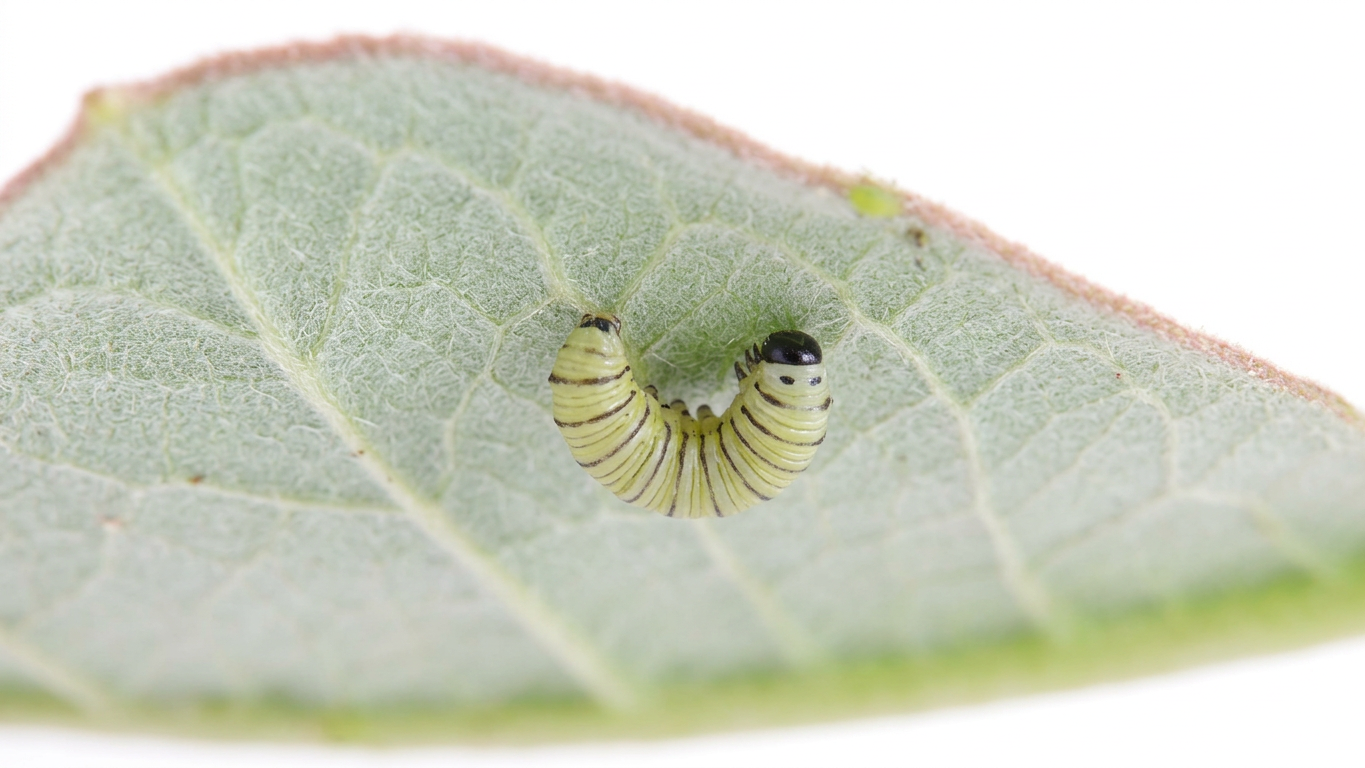
**First-Instar Caterpillars**: Upon hatching (typically 3–5 days after laying, depending on temperature), larvae measure about 2–3 mm and appear translucent greenish with a black head capsule and fine setae. They immediately begin feeding, creating small holes in the leaf surface. Early detection requires close examination of leaf undersides and stems.
**Ovipositing Females**: Females exhibit deliberate, low-flight patterns while scanning plants, periodically curling the abdomen to deposit an egg. They often perch briefly on milkweed before or after laying.

Distinguish monarch eggs and early larvae from those of other species (e.g., queen butterflies) by their solitary placement and host-plant specificity to milkweed.

Weekend Garden & Nursery Starter Actions

Prepare your space this weekend with these practical steps to support arriving monarchs and potential rearing efforts:

1. Inspect existing milkweed (e.g., *Asclepias curassavica*, *A. incarnata*, or native species) for eggs and tiny caterpillars. Conduct checks in the morning when dew aids visibility.

2. Supplement nectar sources if needed with early-blooming perennials such as lantana, verbena, or Gregg’s mistflower to provide refueling stations for adults.

3. Establish a basic rearing enclosure for any collected eggs or first-instar larvae (to protect from predators such as lacewings, spiders, or wasps). A simple mesh cage or pop-up net enclosure suffices; ensure good airflow, place in partial shade, and supply fresh milkweed daily.

4. Avoid pesticides entirely in monarch habitats. If collecting, handle gently with soft brushes and maintain hygienic conditions to minimize disease risk.

5. Document findings with photographs and report to citizen-science platforms.

For detailed protocols on safe rescue, raising, and release practices, refer to “Rescue, Raise, & Release: Create Your Own Monarch Butterfly Experience”.

Female Monarch Butterfly Laying an Egg

Comments (0)

Your email address will not be published. Required fields are marked *

*