From Bare Stems to Fresh Leaves: Moving Day in the Habitat
Greetings, fellow wranglers!
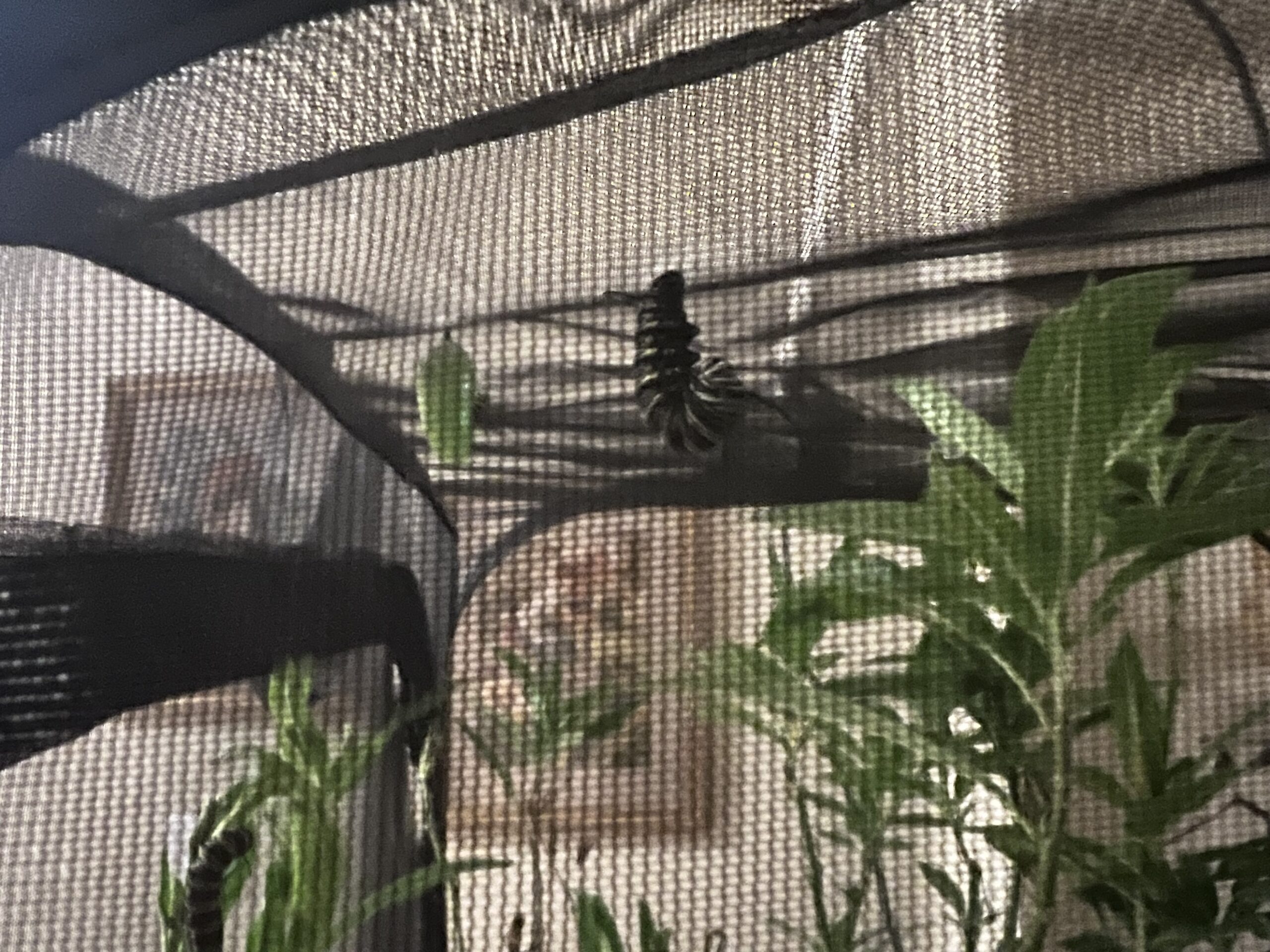
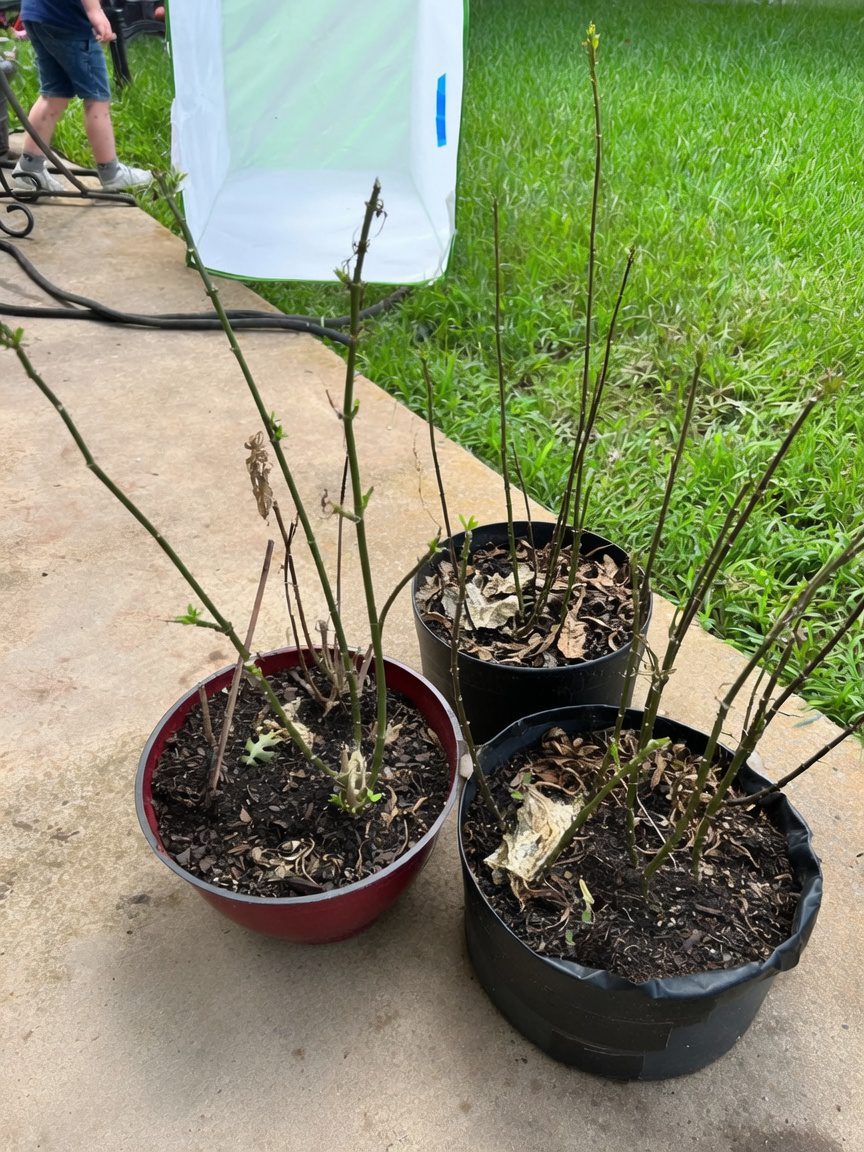
There's a moment every wrangler comes to know — you walk up to the habitat expecting a forest of green, and instead you find bare stems standing at attention, picked as clean as a Thanksgiving turkey. That was the scene this week at the Pinckard Monarch Butterfly Ranch, and it could only mean one thing: moving day.
The Tell-Tale Sign
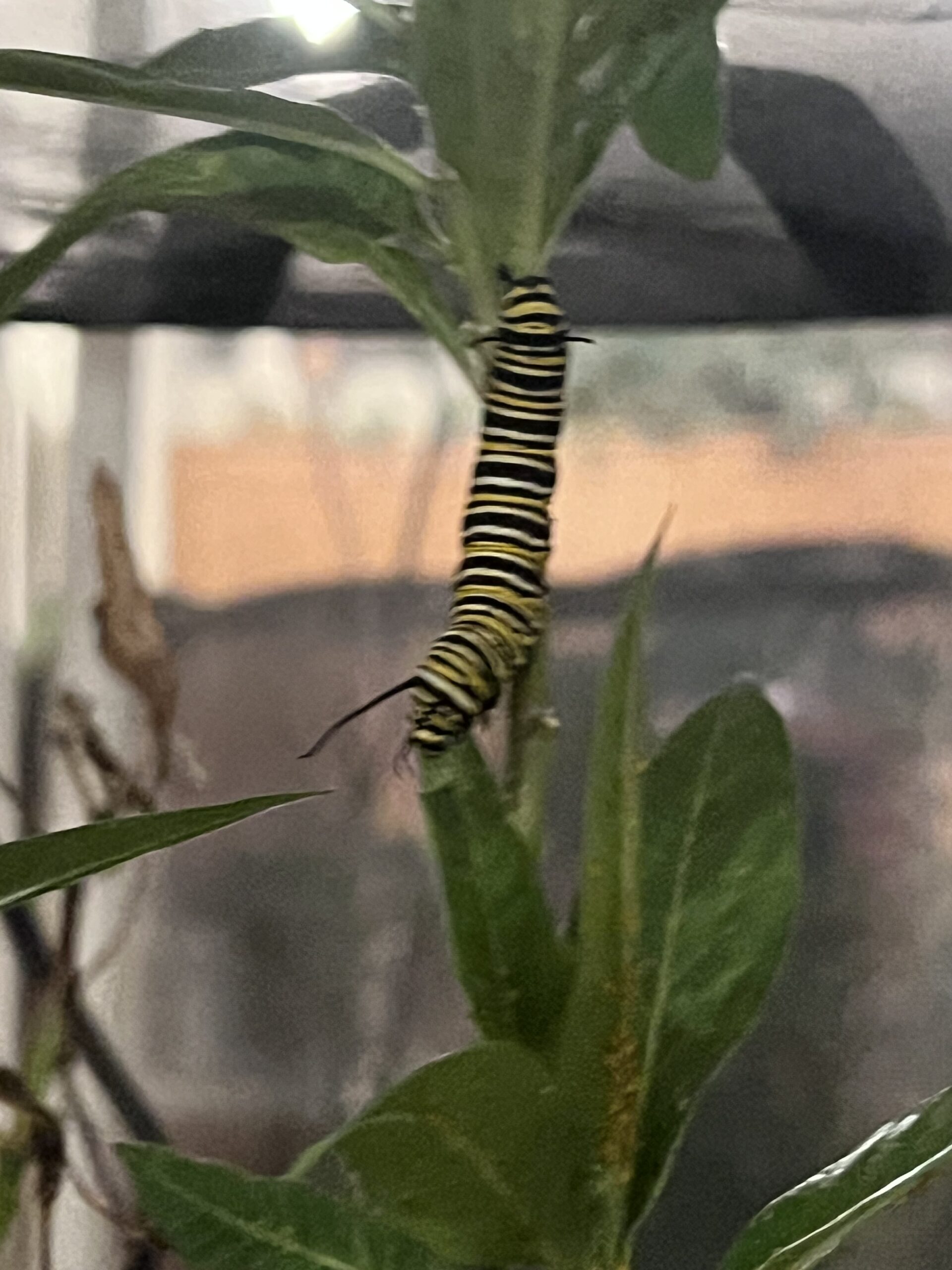
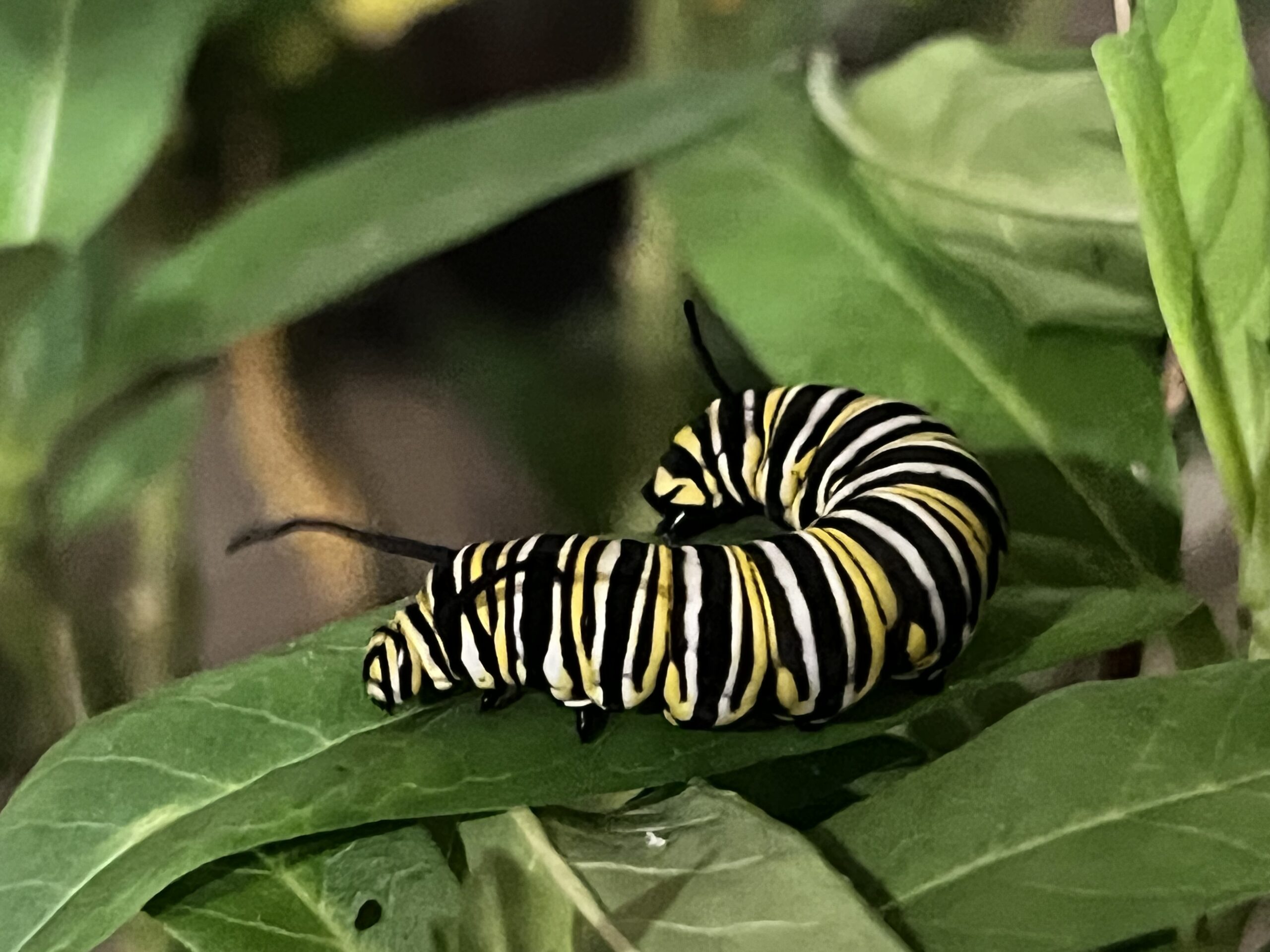
Monarch caterpillars are eating machines, and a thriving instar can strip a stand of milkweed down to nothing but stalk in a matter of days. When I saw the stems standing bare, there was no question what came next — it was time to relocate the whole crew to fresh, lush milkweed before a single one of them went hungry.
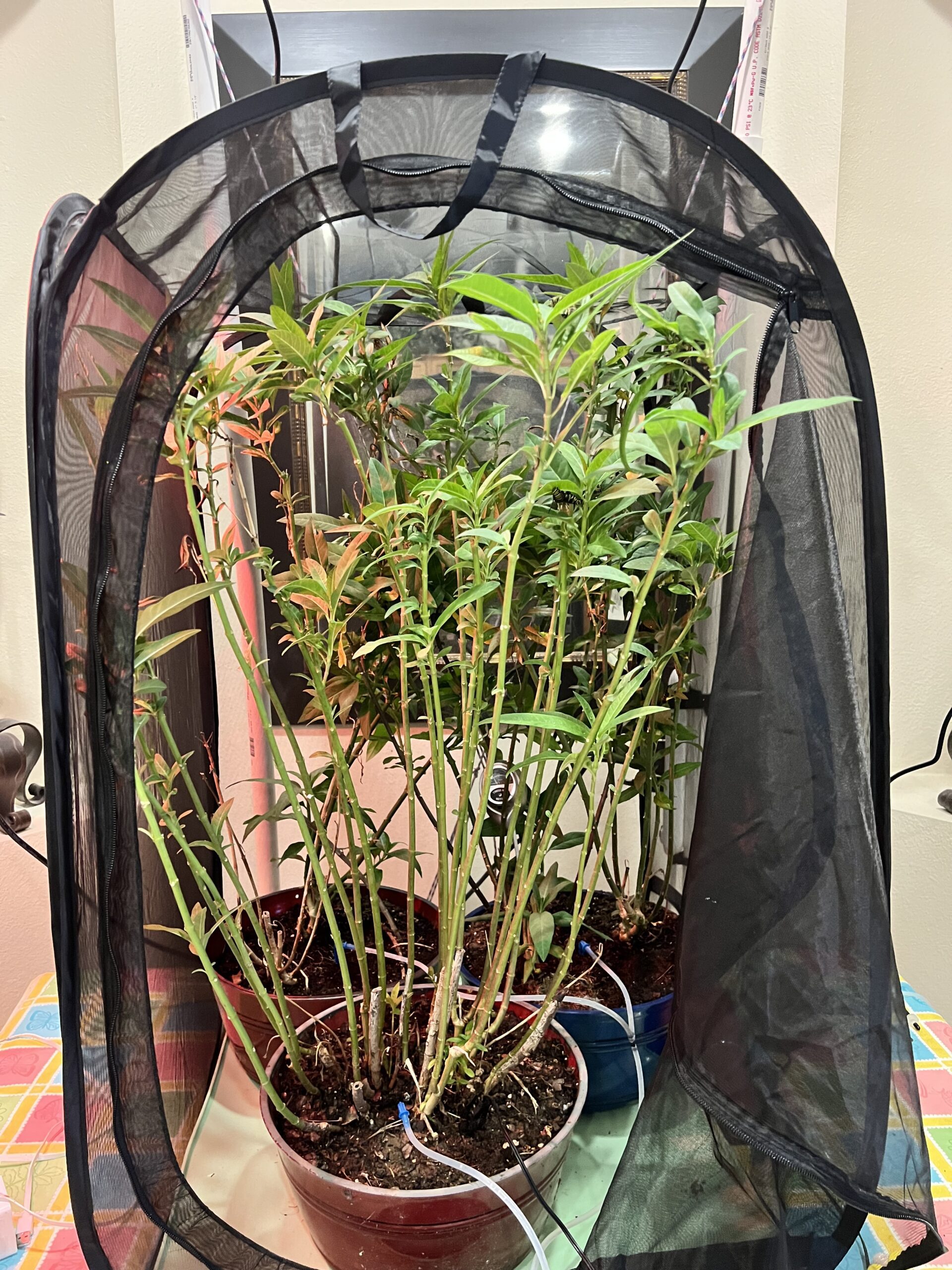
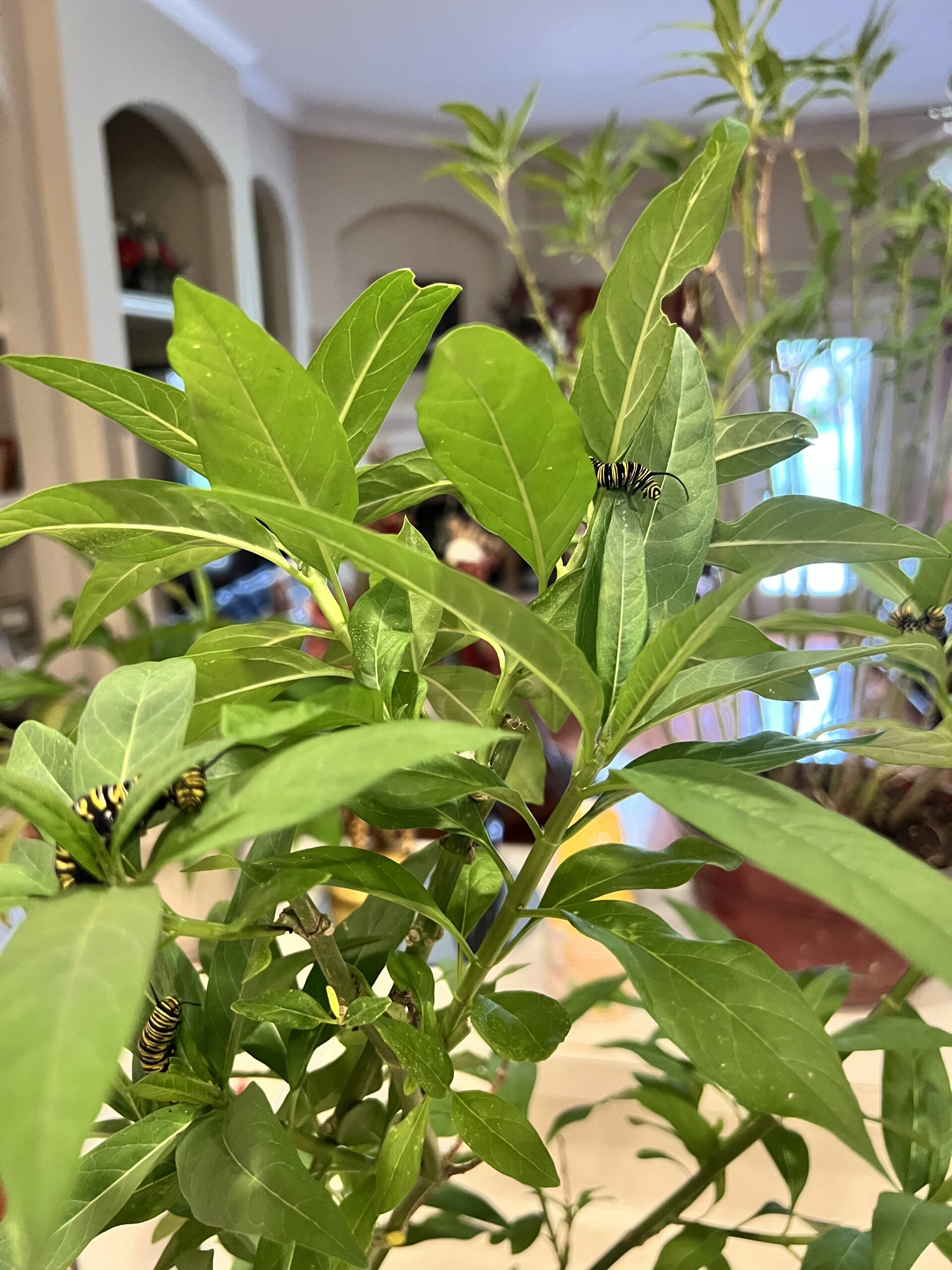
Moving Day: How I Do It
Rehoming caterpillars isn’t a one-size-fits-all job. Depending on where a caterpillar is sitting and what it’s doing at the moment, I reach for one of three methods, in this order of preference:
Leaf transfer. My first choice, whenever possible, is to simply move the leaf itself. If a caterpillar is already resting on a leaf, I’ll clip that leaf from the old plant and lay it right down among a cluster of leaves on the new host. The caterpillar barely notices — one moment it’s on a leaf, and the next, that leaf is just part of a new patch of milkweed. No handling required.
The skewer roll. When a caterpillar isn’t conveniently positioned on a leaf I can transfer, I’ll carefully roll a skewer underneath it. Caterpillars will instinctively grip and climb onto the skewer as it rolls beneath their prolegs. Once it’s aboard, I roll it gently off onto a fresh leaf on the new plant. It’s a slow, deliberate process, but it keeps my hands out of the equation entirely.
Hand transfer — the last resort. Only when the first two methods aren’t practical do I pick a caterpillar up by hand. It works, but it’s my least preferred method, and I’m always as gentle and quick about it as I can be.
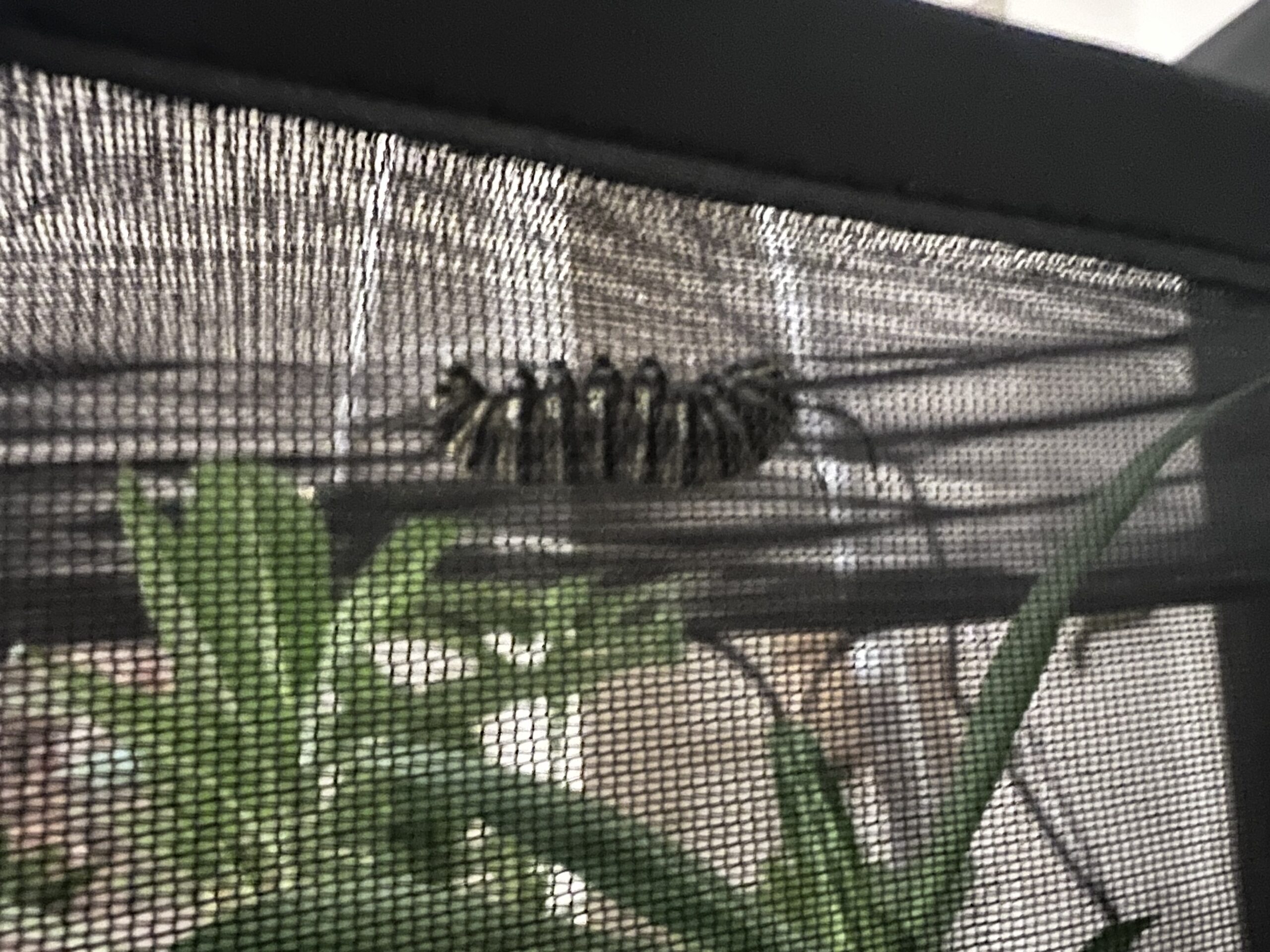
No matter which method I use, there’s one rule that overrides everything else: if a caterpillar is molting, I don’t touch it. Molting is a delicate, vulnerable process, and any disturbance at the wrong moment can cause real harm. Part of wrangling well is knowing when to simply wait — to let nature finish what it started before you intervene at all. My goal in every rehoming is to be as unobtrusive as possible, working with their natural rhythms instead of around them.
Habitat Housekeeping
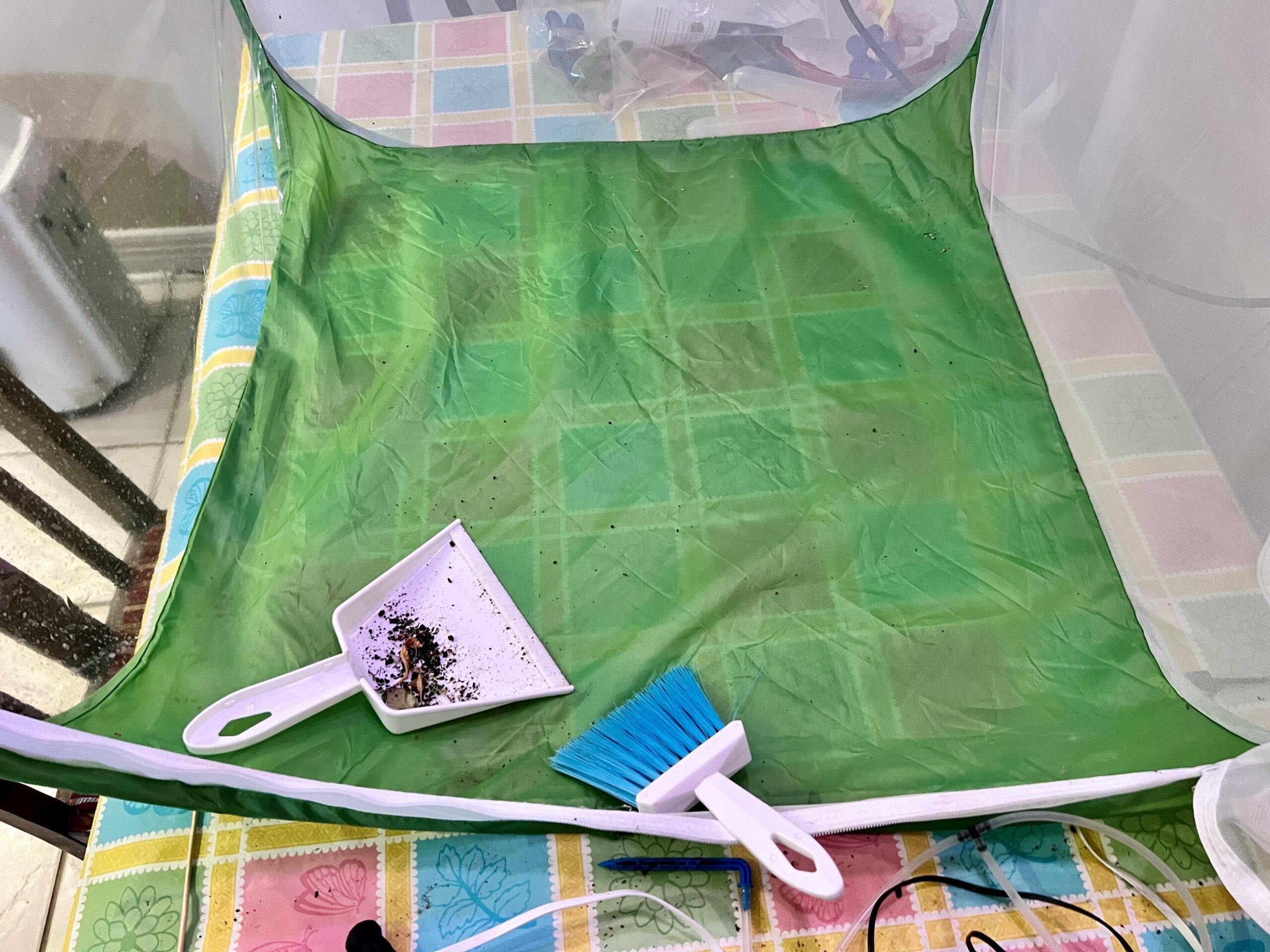
Moving day is also the perfect opportunity for a deeper clean. Every time a spent milkweed plant comes out and a fresh one goes in, I take the chance to clear the habitat of any leftover debris and frass that’s built up around the base. A habitat is only as healthy as it is clean, and an emptied-out plant slot is the easiest time to reach every corner.
That said, the deep clean at plant-swap time is really just a supplement to the daily routine. Every single day, frass removal and general housekeeping happen without fail — it’s one of the quiet, unglamorous tasks that keeps the whole habitat healthy and keeps disease and mold from ever getting a foothold. It may not be the most exciting part of wrangling, but it’s one of the most important.
Two Early Instars, Found and Brought Home
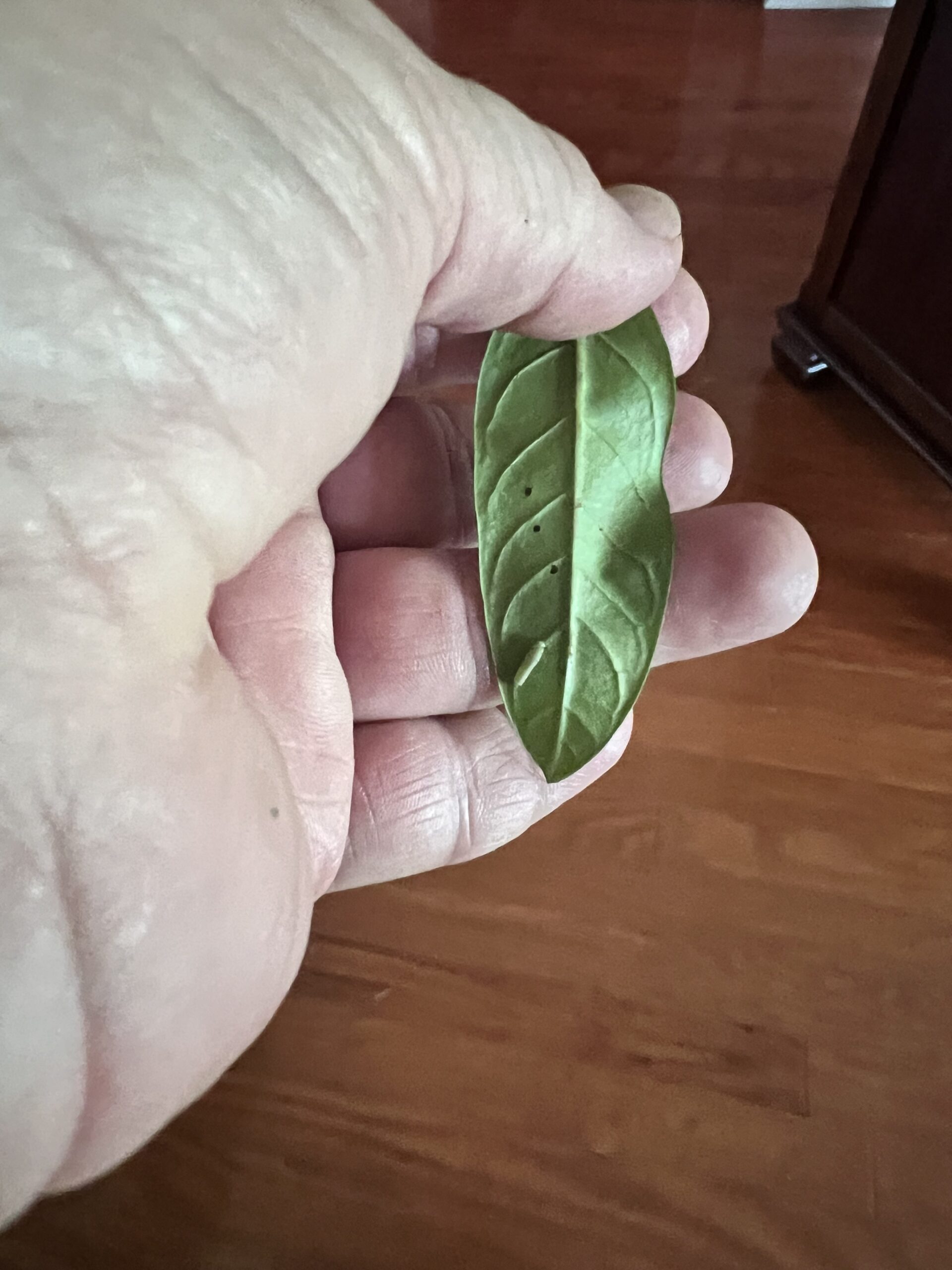
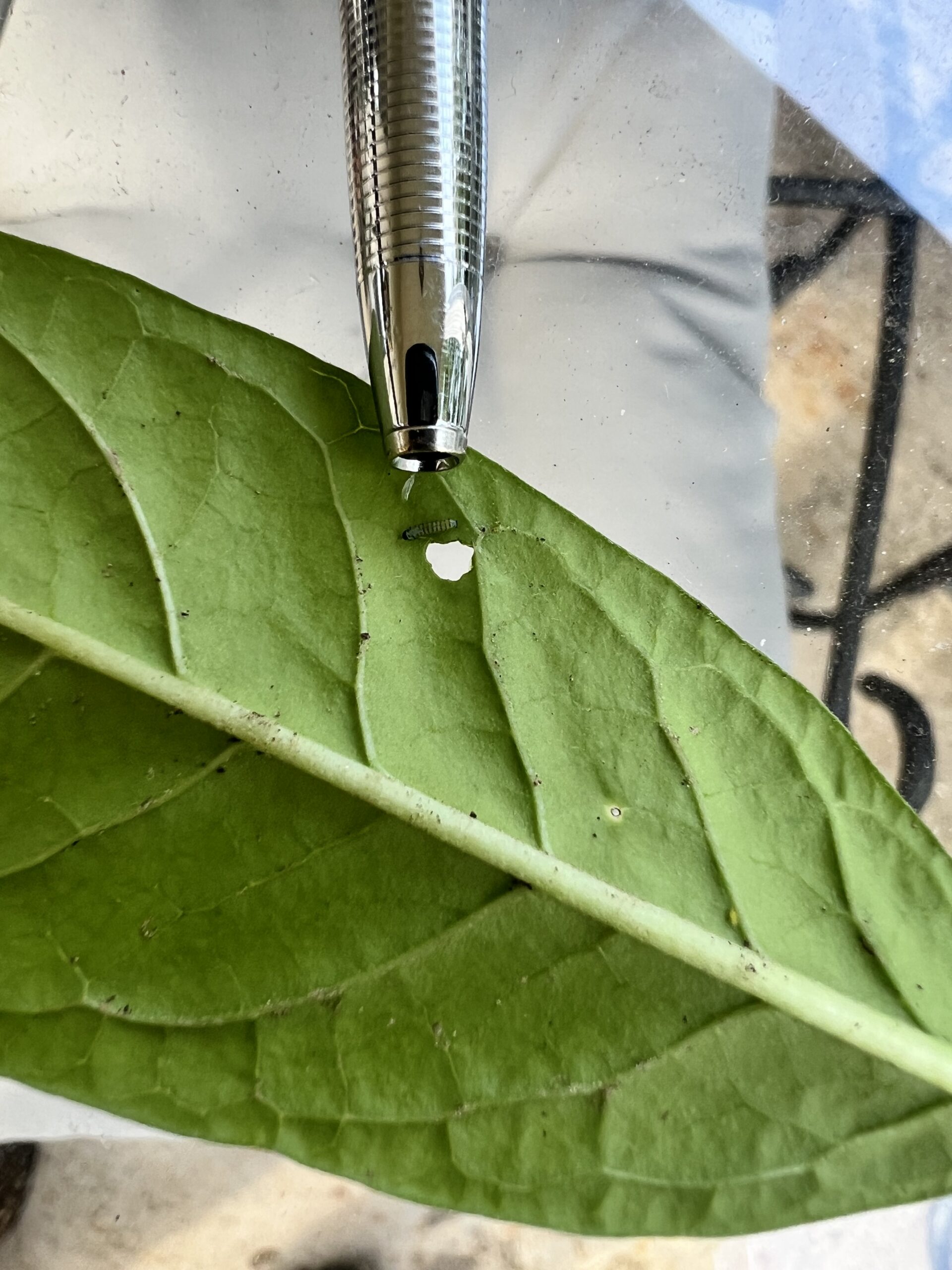
This wave has been quieter on the rescue front than the last. Since the initial round of fifteen-plus, I’ve located and brought in just two early instar caterpillars from the garden — small finds, but every one counts. Fewer rescues this week likely means more eggs and early instars are managing to survive out in the garden itself, which is exactly what a healthy, well-established habitat should look like.
Garden Tips: Keeping the Supply Chain Growing
None of this works without the gardens doing their part. A rehoming like this week’s is only possible because there’s fresh milkweed ready and waiting — which means the real work happens well before moving day. A few things I’m keeping an eye on right now:
- Stagger your milkweed. Don’t let your whole stand mature and get eaten down at the same time. Rotating potted milkweed in and out, and staggering plantings where you can, means there’s always a fresh patch coming into its prime just as another gets stripped.
- Cut back and let it flush. Milkweed that’s been eaten to the stem isn’t done — with regular watering and a little heat, most varieties will push out a new flush of tender leaves within a week or two. Don’t be too quick to pull a bare-stemmed plant; give it a chance to bounce back.
- Water deep, water early. In the thick of a Louisiana July, both the pollinator garden and the milkweed garden need consistent, deep watering — early morning is best, so plants have moisture reserves before the heat sets in and less water is lost to evaporation.
- Deadhead the pollinator garden. Keeping spent blooms cut back keeps your nectar plants producing and keeps the garden looking its best for the adults who’ll be visiting once this wave takes wing.
- Keep scanning. Even with a strong habitat population, the garden itself is still home to eggs and early instars you won’t catch unless you’re looking. A daily walk-through, checking leaf undersides, is still the best way to catch anyone who needs a hand.
What’s Next
With fresh milkweed underfoot, this crew has what it needs to keep growing toward the chrysalis stage. I’ll keep watching, keep the gardens fed and watered, and keep wrangling whatever comes my way in the meantime.
Flutter and Float with the Monarchs
Wrangle the Wonders