Two Habitats, Two Tempos: Inside the Ranch This Weekend
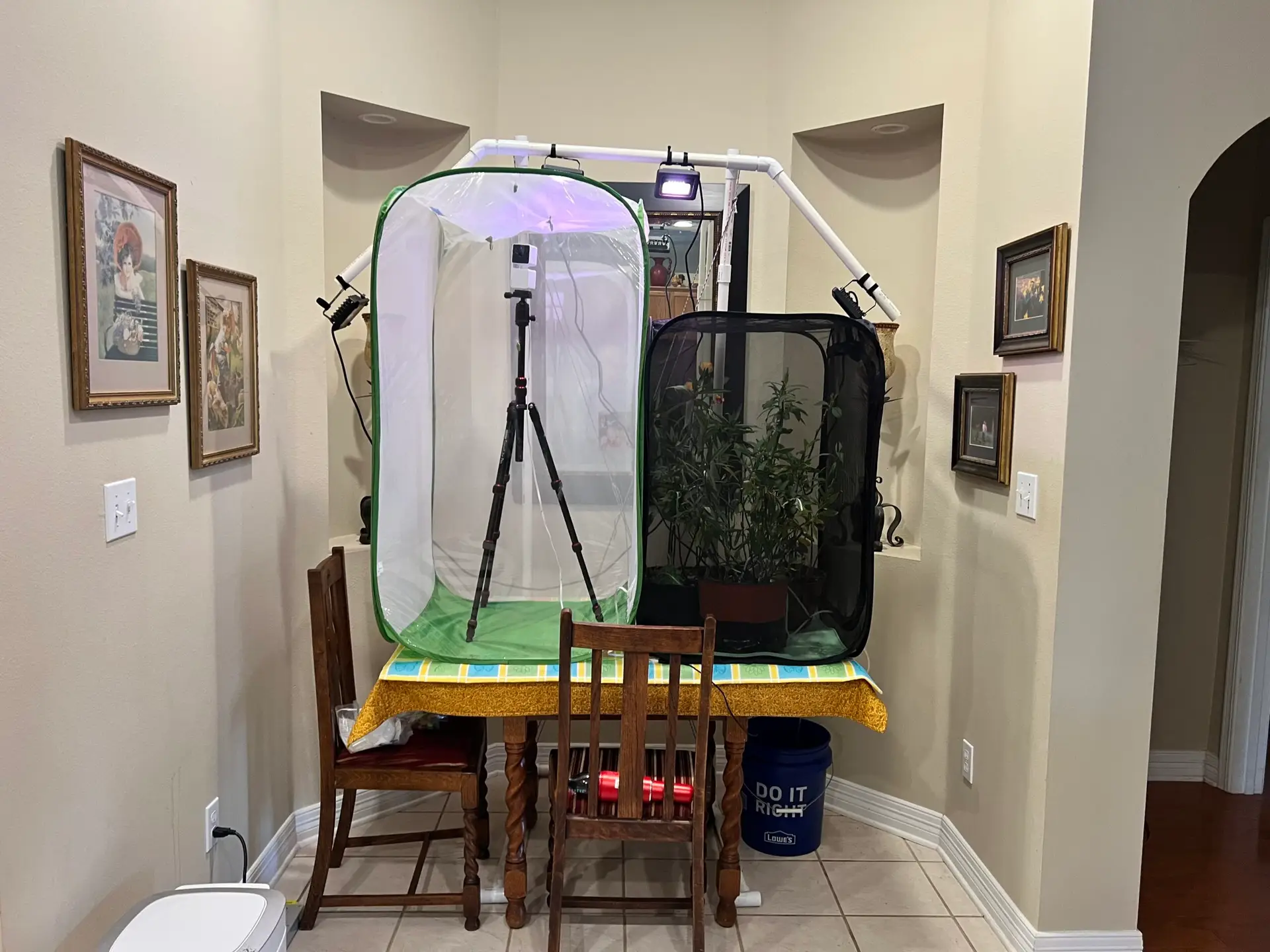
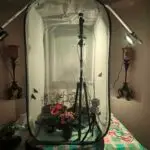
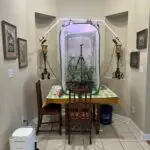
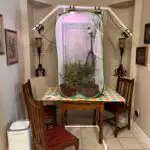
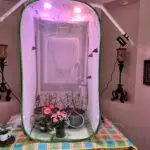
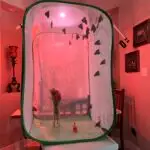
This weekend at the Pinckard Monarch Butterfly Ranch, two habitats are running side by side, and they could not feel more different from each other.
The first is quiet. Four chrysalises hang motionless from the screen, jade-green and still as small lanterns. The second is alive with motion — more than twenty-five caterpillars, each one of them in instars 1 through 3, working their way across fresh milkweed leaves. Same species, same season, two very different tempos.
Here is what the weekend looks like from inside the ranch.
Habitat One: The Chrysalis Wave
Habitat One holds the wave that came before this one. Four chrysalises, formed within a day or two of each other, hang in a loose row near the top of the screen. Right now, they are jade-green with a faint scatter of gold dots — the classic look of a monarch chrysalis that still has several days to go. When that green begins to darken, and the orange-and-black of folded wings starts to show through the chrysalis wall, I will know we are inside the final twenty-four hours before emergence.
Habitat One needs almost nothing from me right now. No fresh milkweed to swap in. No frass to clear off the floor. No tiny caterpillars to scan for trouble. Just quiet observation, a few gentle checks each day, and a clear floor in case one of them emerges earlier than expected.
It is the part of the season that asks for patience more than work.
Habitat Two: The Next Wave
Habitat Two is the next wave, just getting started. Twenty-five-plus caterpillars, all in early instars — that early stretch from hatch through the third molt.
If you have never looked closely at this stage, it is worth slowing down for:
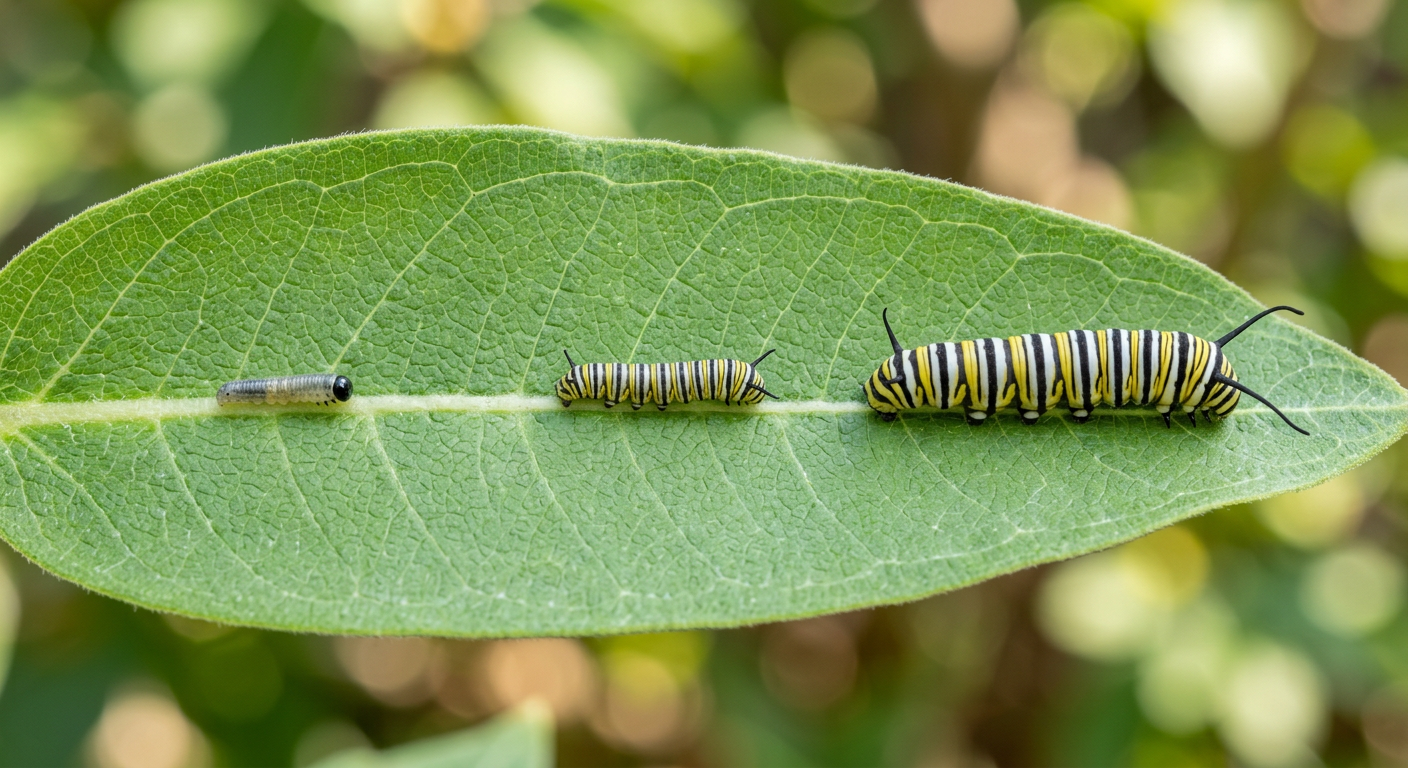
- Instar 1 caterpillars are barely the length of a grain of rice and almost translucent. You can miss them entirely if you are not looking.
- Instar 2 caterpillars start to show their first real stripes. They look like miniature versions of what is coming.
- Instar 3 caterpillars look like proper monarch caterpillars — bold black, white, and yellow bands, real appetite, real presence on the leaf.
Habitat Two needs daily attention. Fresh potted milkweed rotated in before the leaves get stripped. Frass cleared from the floor every morning. Eyes on the smallest crawlers to make sure they are chewing, moving, and gaining ground.
The Sun That Lives Inside
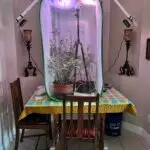
Both habitats run on a programmed LED day. The lights are not decorative. They are standing in for the sun the monarchs would otherwise feel through a window or under a porch. Monarchs use light cues for development, behavior, and timing, so I treat the lighting schedule with the same seriousness as the milkweed supply.
A day inside the habitats looks like this:
- 7:00 AM — Sunrise. The east lamp lights a soft yellow, the way the first hour of summer daylight looks before the sun fully clears the horizon.
- 8:30 AM — First daylight. The lamp east of center lights a clean daylight white. The habitat is now in early morning.
- 10:00 AM — Full daylight. The lamp west of center lights, also daylight white, and the sunrise lamp extinguishes. The habitat is in full midday.
- 5:00 PM — Sunset begins. The sunset lamp lights an orange glow, and the east-of-center daylight extinguishes. The light warms and softens — the same shift you feel outdoors when the afternoon tilts toward evening.
- 6:30 PM — Evening fade. The west-of-center daylight extinguishes. Only the orange sunset lamp remains.
- 7:30 PM — Nightfall. The sunset lamp extinguishes. The habitats go dark for the night.
The point of all of this is consistency. Outdoor monarchs feel sunrise come on slowly, full midday for hours, a long warm evening, then night. The programmed sequence gives the monarchs inside the same arc, the same long-summer rhythm, every single day.
It is, in the most literal sense, a sun that lives inside the ranch.


Watering Without Interruption
The potted milkweed in habitat two sits on a self-watering system, and that decision has nothing to do with my convenience.
Every time a wrangler reaches into a habitat to water a plant, that is a jostled leaf and a startled caterpillar. The smallest instar 1 crawlers are especially vulnerable to being knocked loose, and any caterpillar that ends up on the floor is one I have to find and place back on a leaf without injuring it.
The self-watering reservoir keeps the milkweed hydrated from below without anyone having to reach in. Less disturbance. Fewer falls. More time eating.
The whole theme of the setup, really, is do not interrupt the caterpillars.
Why Two Habitats Instead of One
You can absolutely raise monarchs in a single habitat. Most wranglers start that way, and Rescue, Raise, & Release walks you through it. But once your rearing grows in volume, separating the stages earns its keep:
- The chrysalises stay undisturbed. Active caterpillars climb everything, including the silk pad of a sibling’s chrysalis. Separating the stages removes that risk entirely.
- Disease pressure drops. OE, NPV, and bacterial issues spread more easily when stages mix. Stage-separated habitats are one of the simplest hygiene controls available.
- Each habitat runs on its own rhythm. The chrysalis habitat asks for patience. The caterpillar habitat asks for hands-on care. Separating them lets you serve each one properly without shortchanging either.
- It is easier to observe and document. You see each stage clearly — exactly the kind of clarity that makes raising monarchs more meaningful, and more shareable.
The Wrangler’s Job This Weekend
Two routines, side by side.
In the chrysalis habitat:
- Visual check morning and evening.
- Watch the chrysalis color for the late-stage darkening, then for the wings showing through.
- Keep the floor clear in case of an early emergence.
- Do not bump the screen.
In the caterpillar habitat:
- Fresh, undamaged milkweed leaves where the smallest instars are feeding.
- Clear yesterday’s frass from the floor.
- Count and scan every caterpillar. Anything that looks off gets a closer look.
- Watch for tachinid signs — sluggishness, darkening, unusual frass.
- Rotate potted milkweed before any plant gets stripped.
For the Reader at Home
You do not need two habitats to start raising monarchs. One good habitat, one fresh batch of milkweed, and a willingness to look closely is enough. But as your rearing grows — as your chrysalis count climbs and new caterpillars keep coming in — adding a second habitat changes the work in your favor. The chrysalises get quiet. The caterpillars get attention. You get clarity.
If you are spotting caterpillars on your backyard milkweed right now and trying to figure out what instar they are in:
- Instar 1: Tiny, pale, mostly translucent. Easy to miss.
- Instar 2: First clear stripes coming in.
- Instar 3: Recognizably a monarch caterpillar — bold stripes, real appetite.
Rescue, Raise, & Release: Create Your Own Monarch Butterfly Experience walks through all of it — habitat selection, milkweed sourcing, lighting choices, daily care, the whole rhythm of the season.
Closing the Day
Standing between the two habitats this morning, I felt the contrast the way it does most days at this point in the season. One side: silence and stillness, four jade lanterns. The other side: more than two dozen lives stretching, eating, growing into themselves. The light comes up the same way over both — soft yellow at seven, daylight white by ten — and the same long summer evening will fade them both into nightfall.
Two habitats, two tempos, one quiet engine running.
If you are raising monarchs at home this season, tag your habitat photos #MonarchButterflyWrangler. I would love to see your setups.