From Wings to Silk Buttons: A Wave Finishes, a Habitat Resets
Greetings, fellow wranglers!
This weekend at the Pinckard Monarch Butterfly Ranch, two things are happening that look very different on the surface but are part of the same turning wheel.
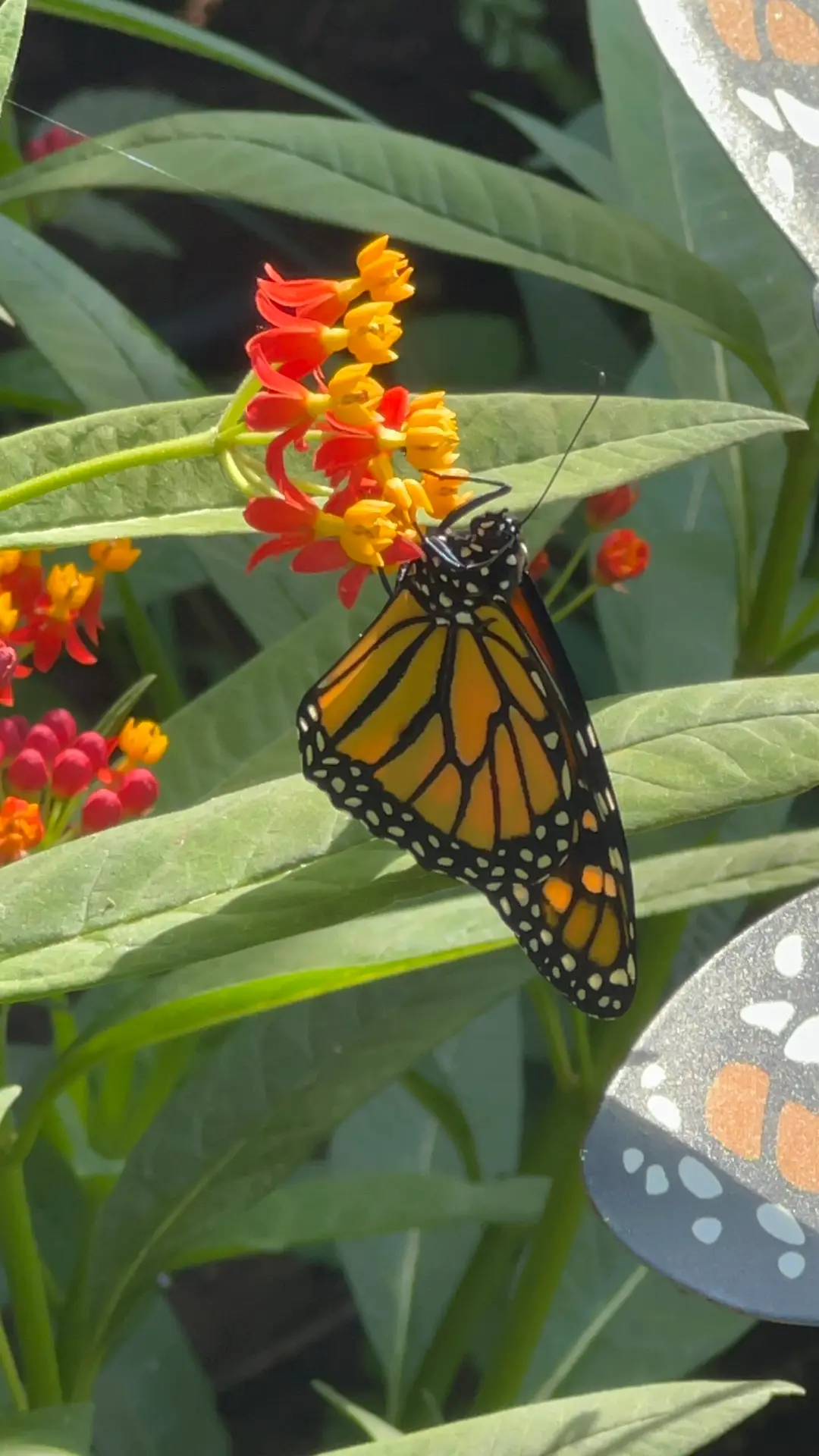
In Habitat One, the four chrysalises that hung in silence a week ago are gone. The butterflies emerged, dried their wings, and were released into the waystation garden. The habitat is empty now, and quiet in a different way — not the quiet of waiting, but the quiet of a job finished. It is time to clean it.
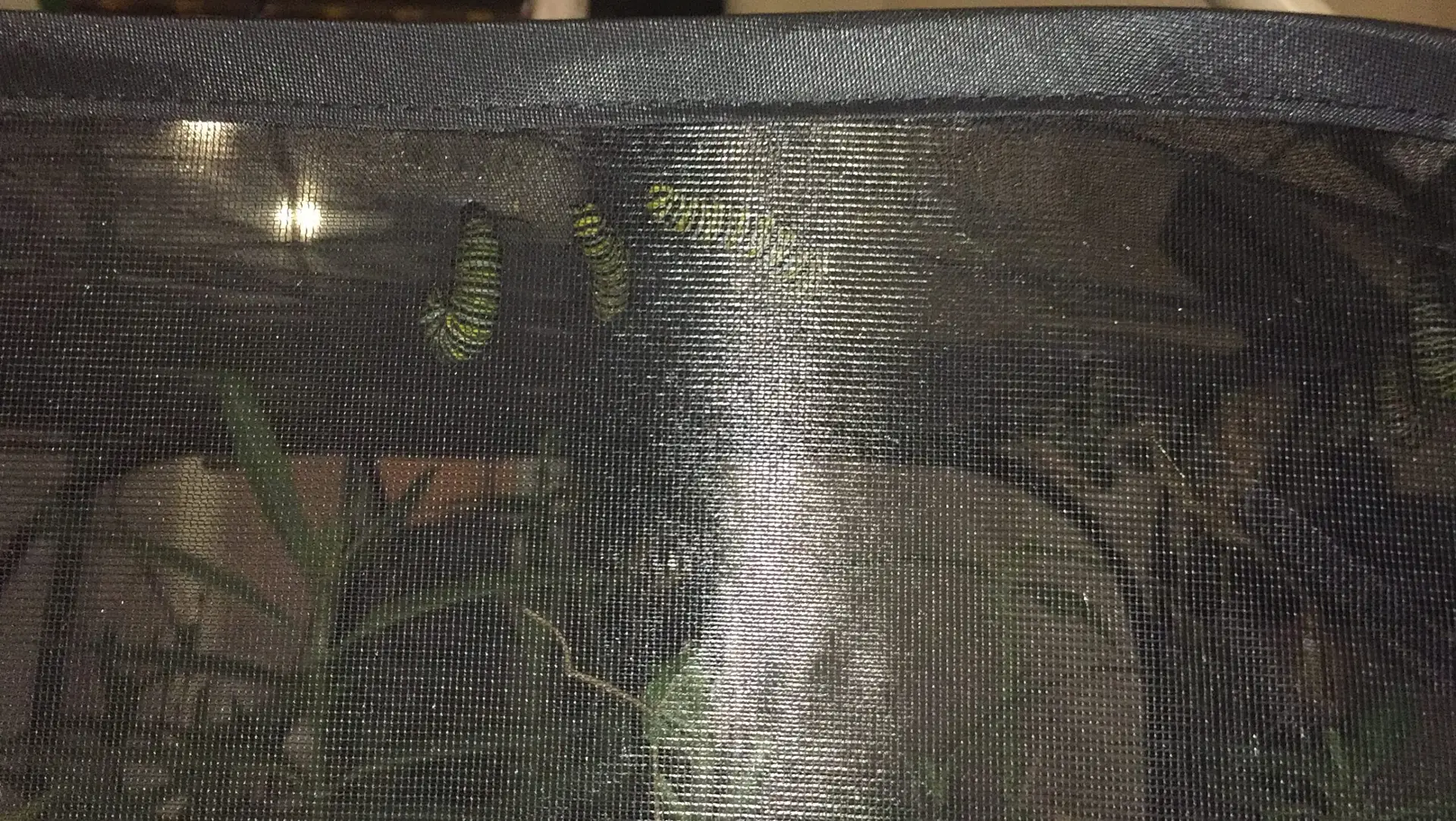
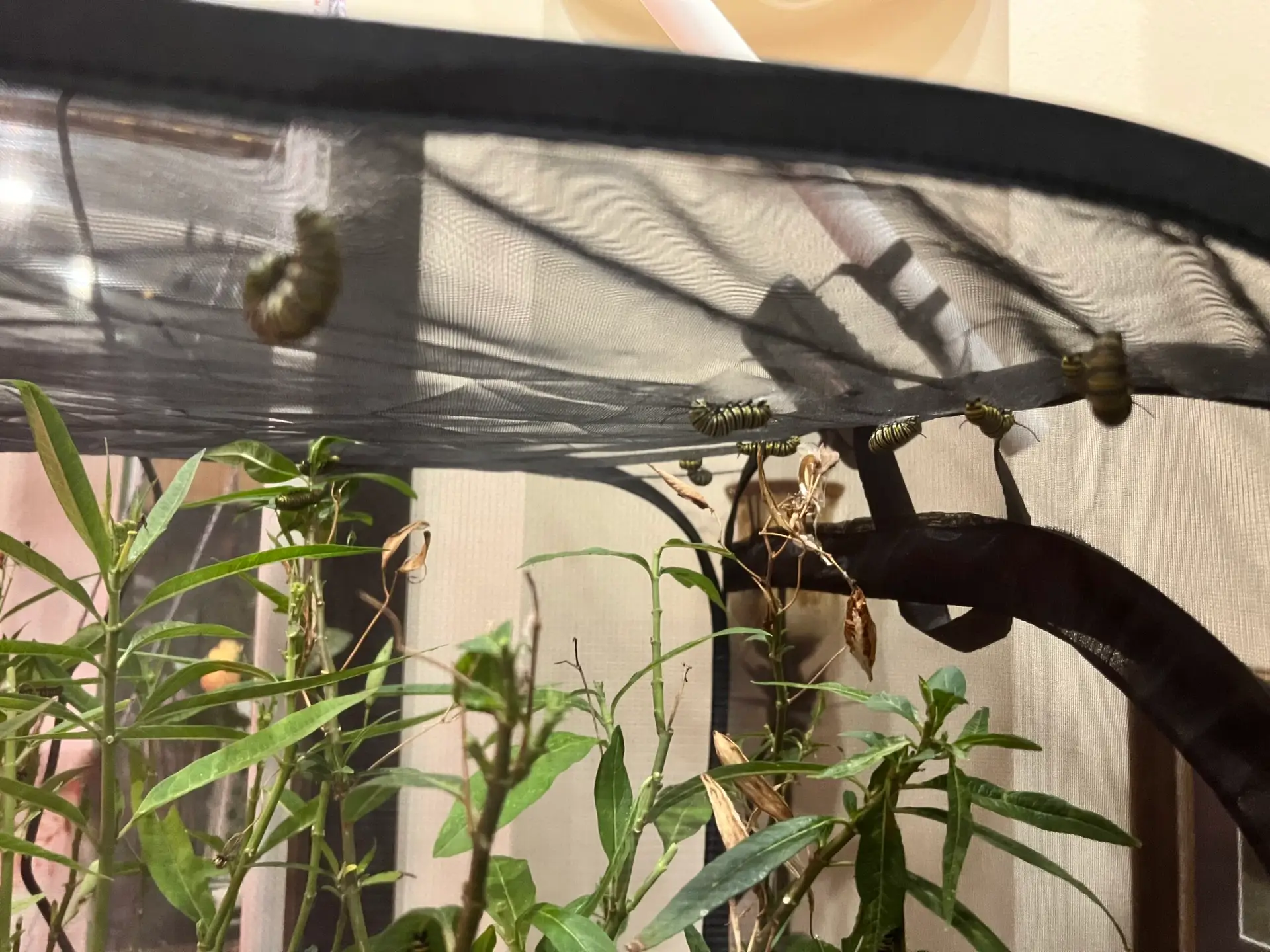
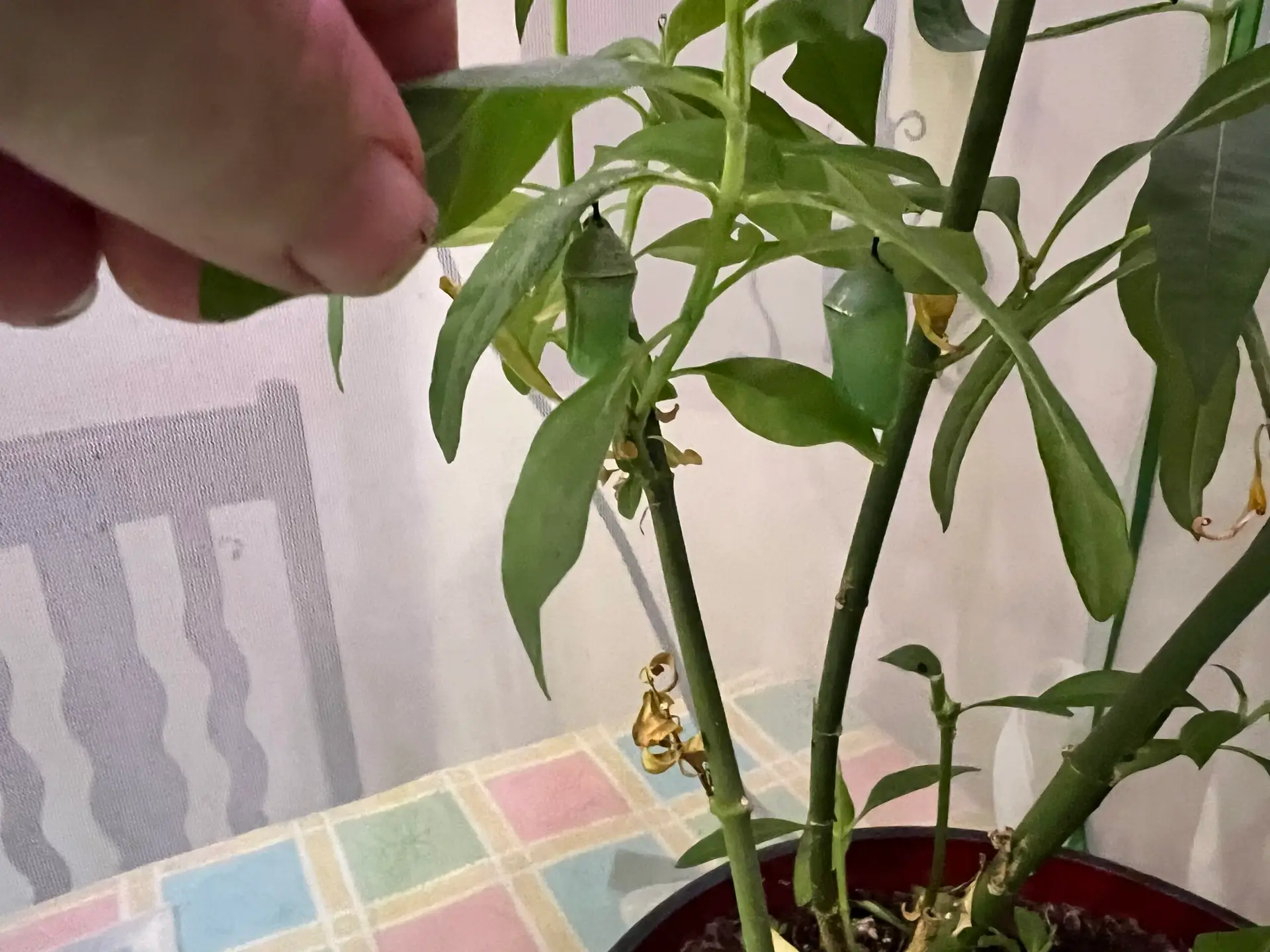
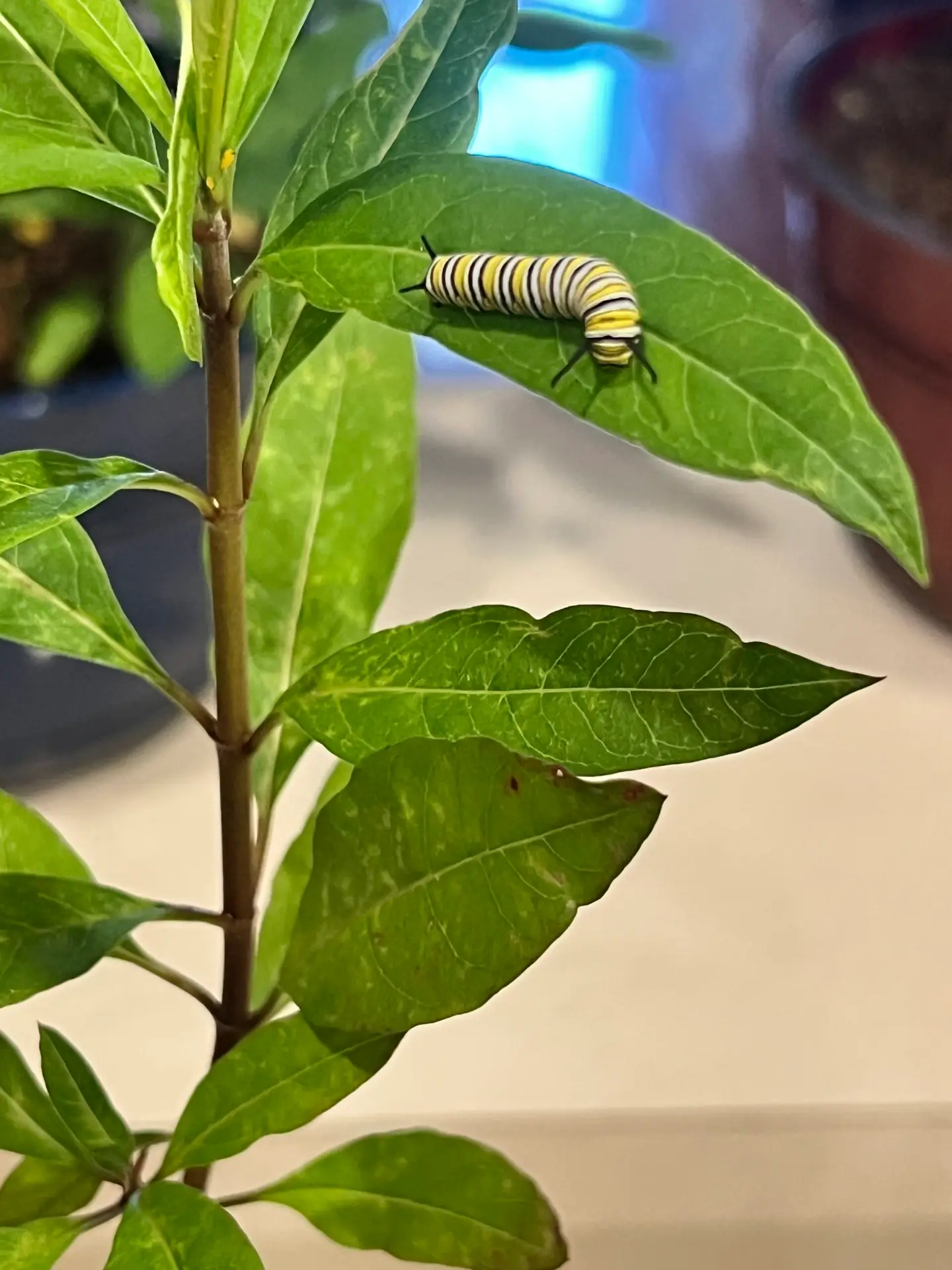
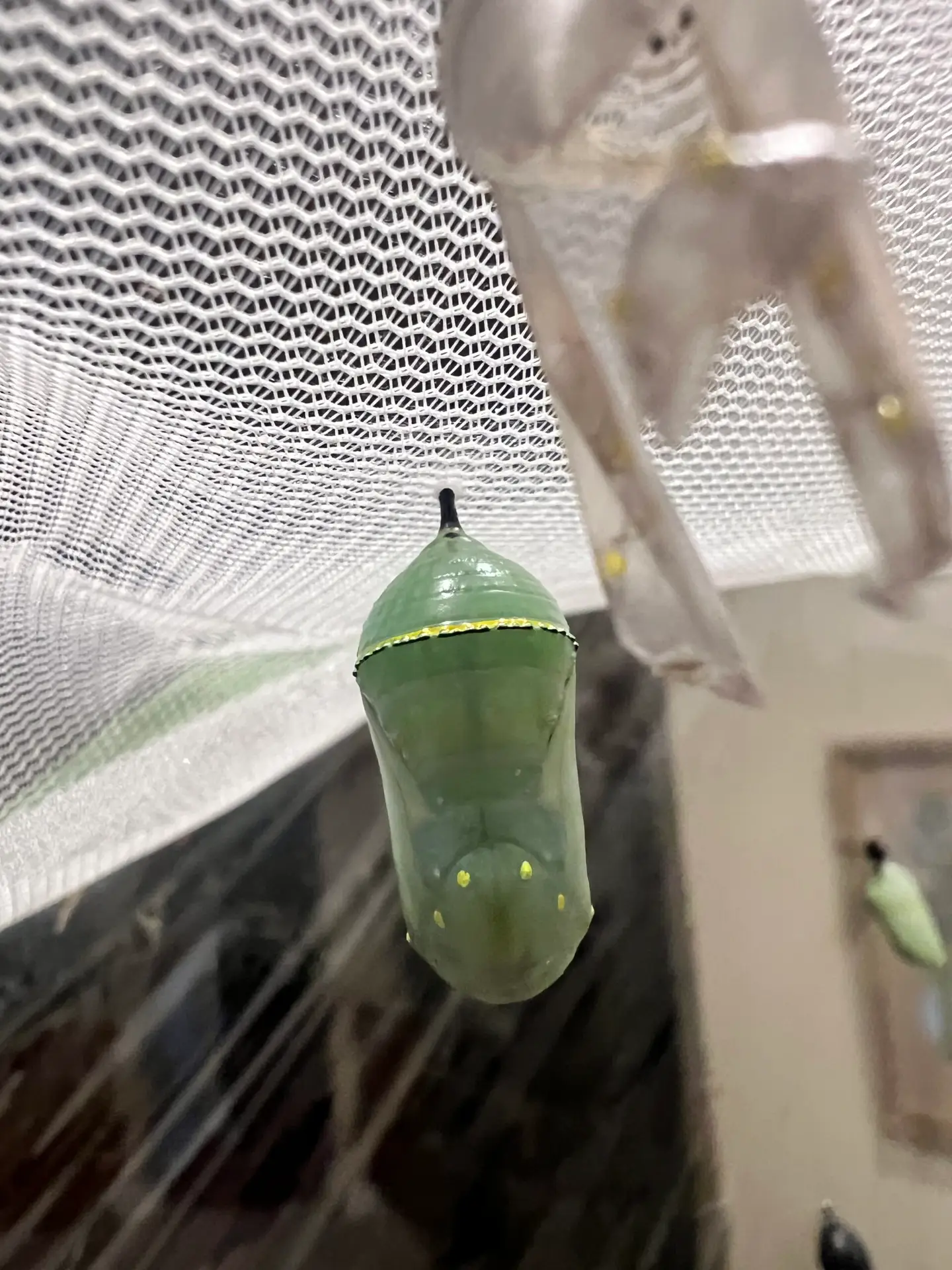
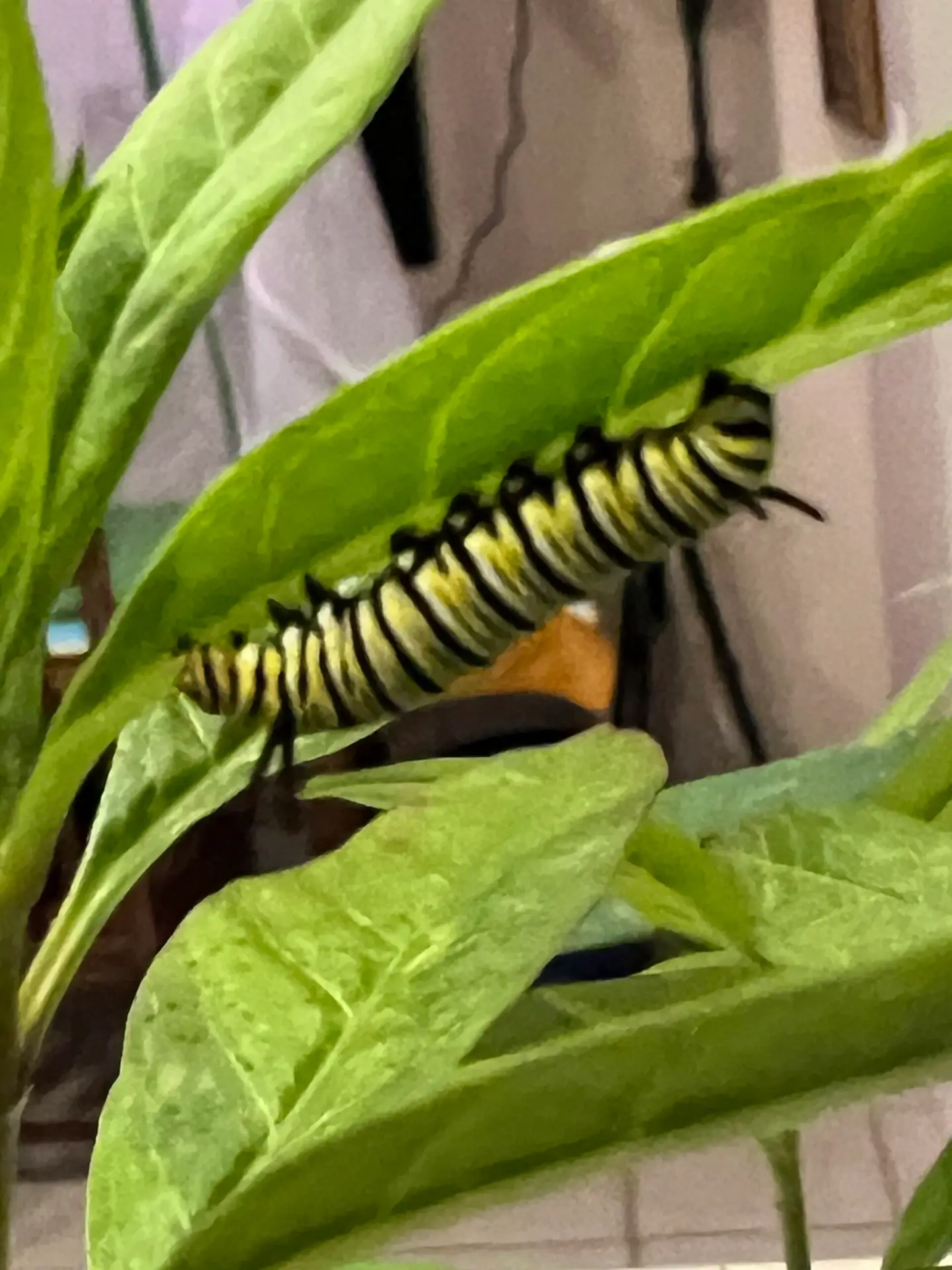
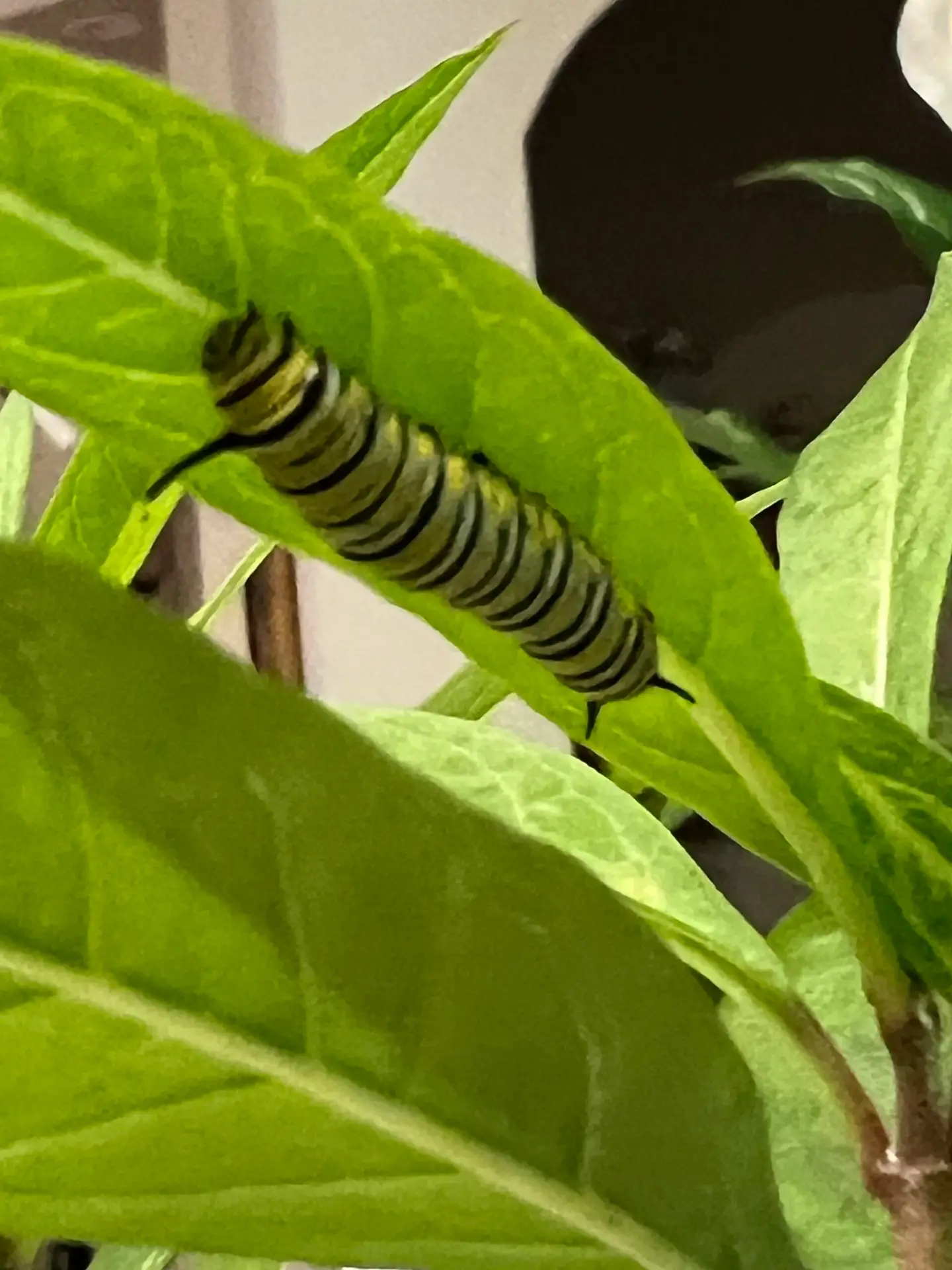
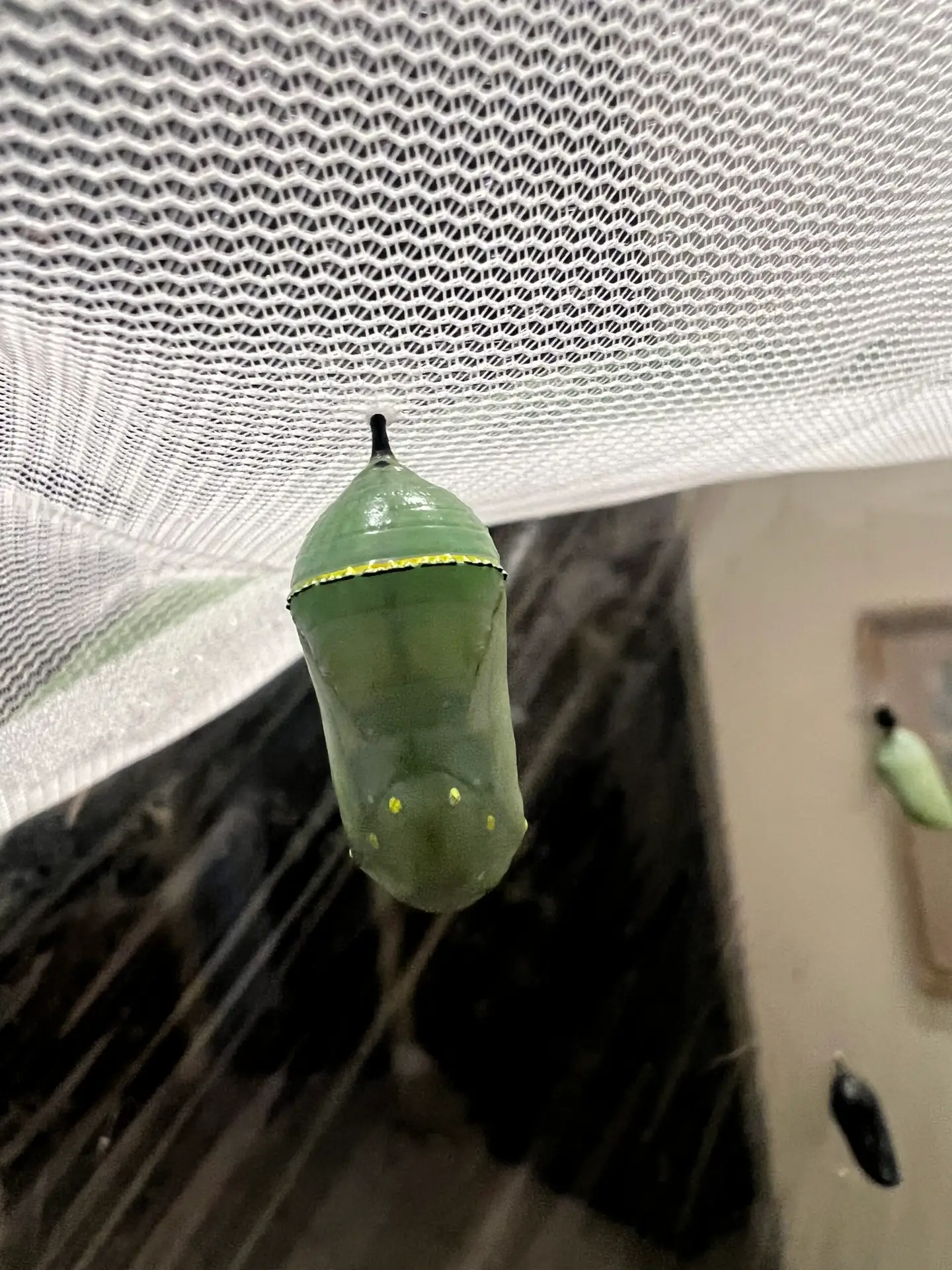
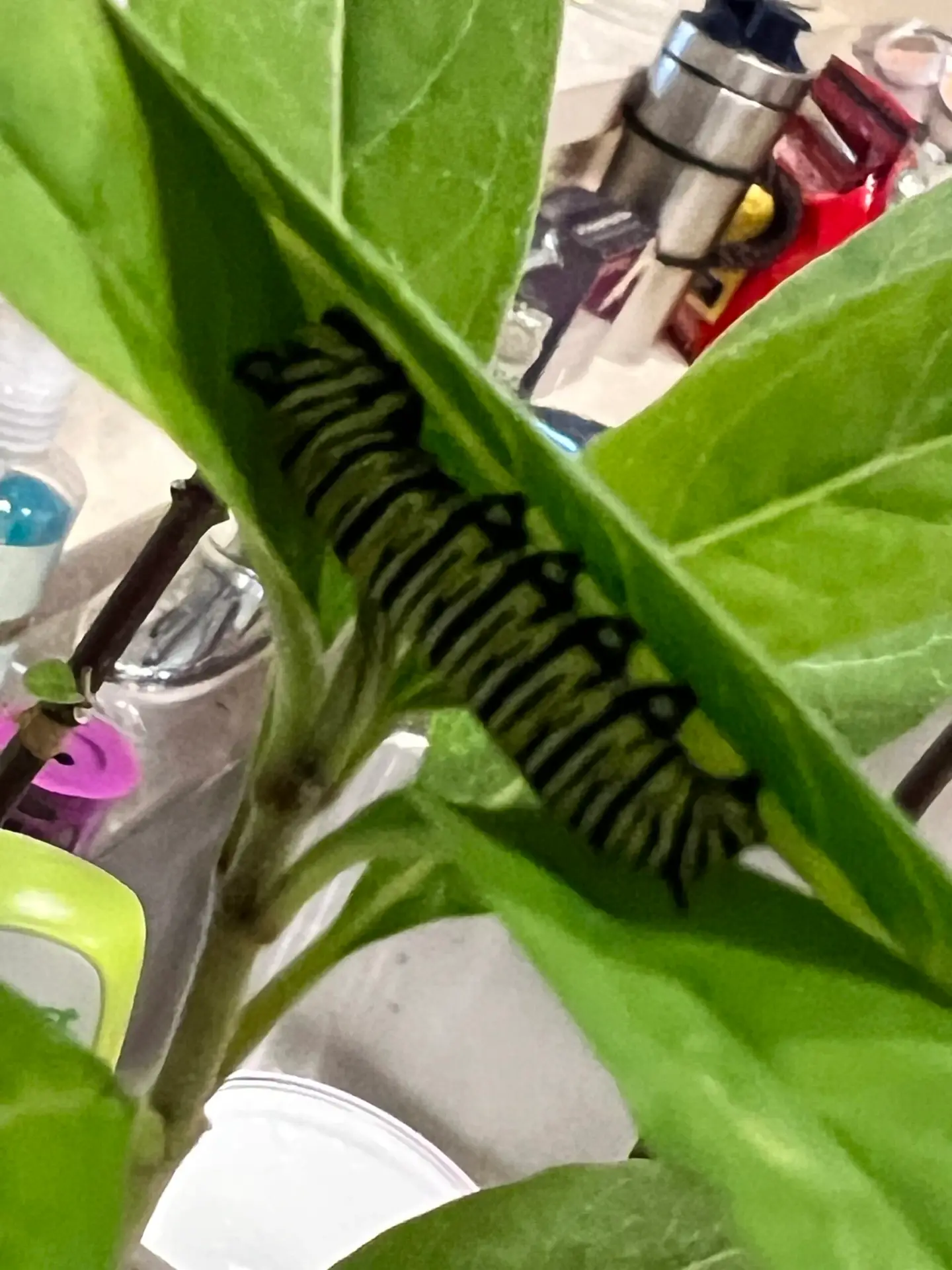
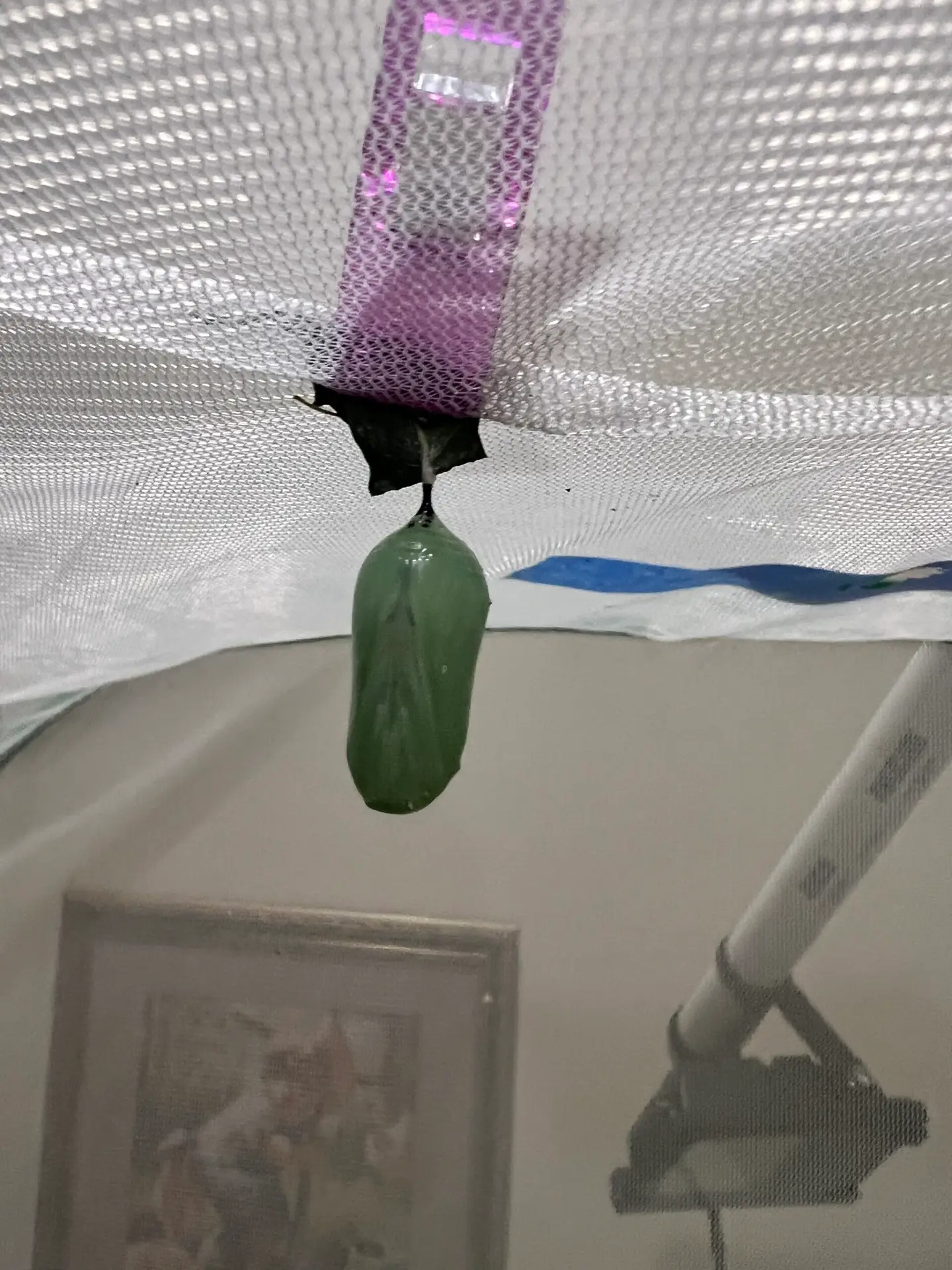
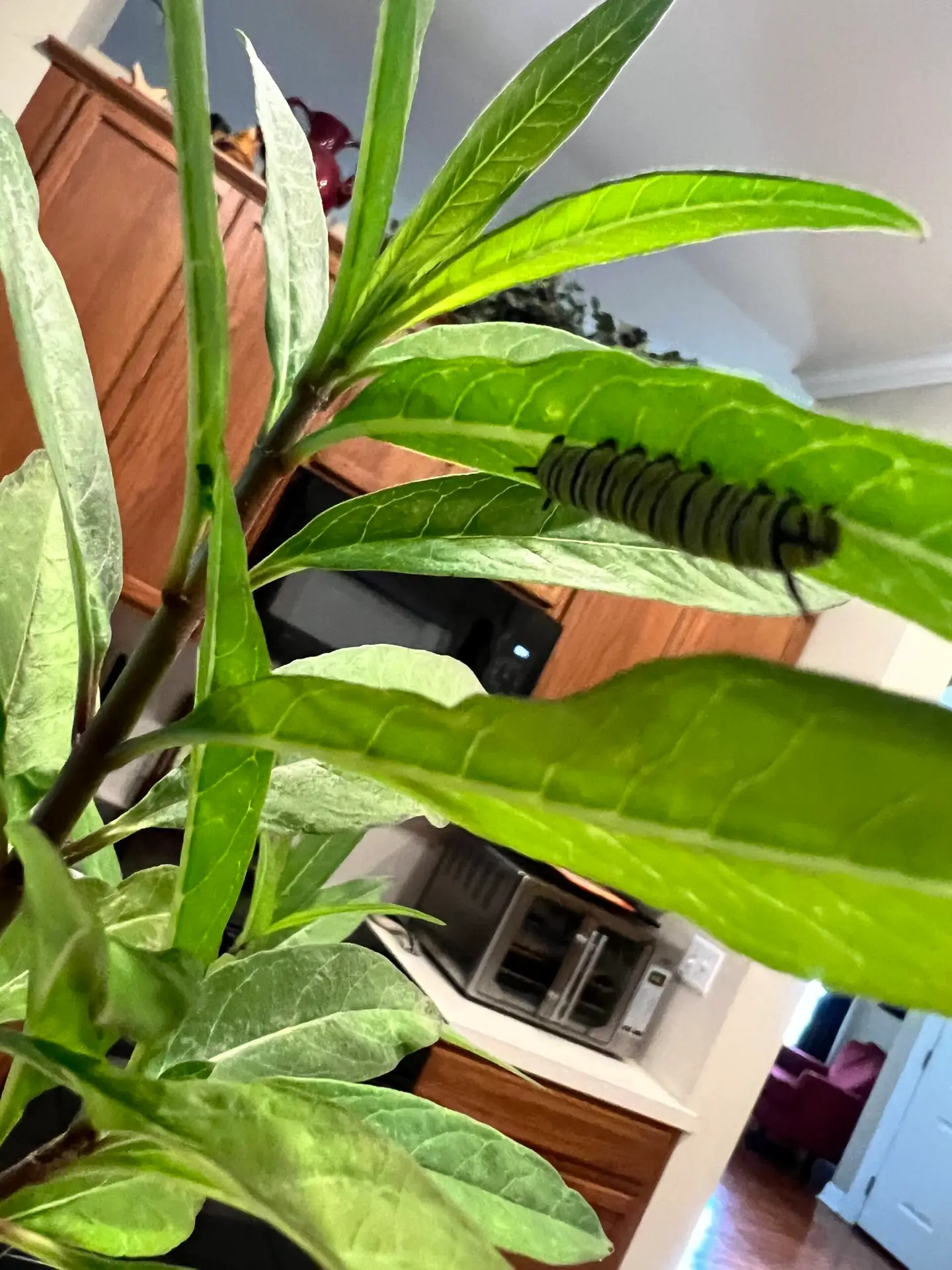
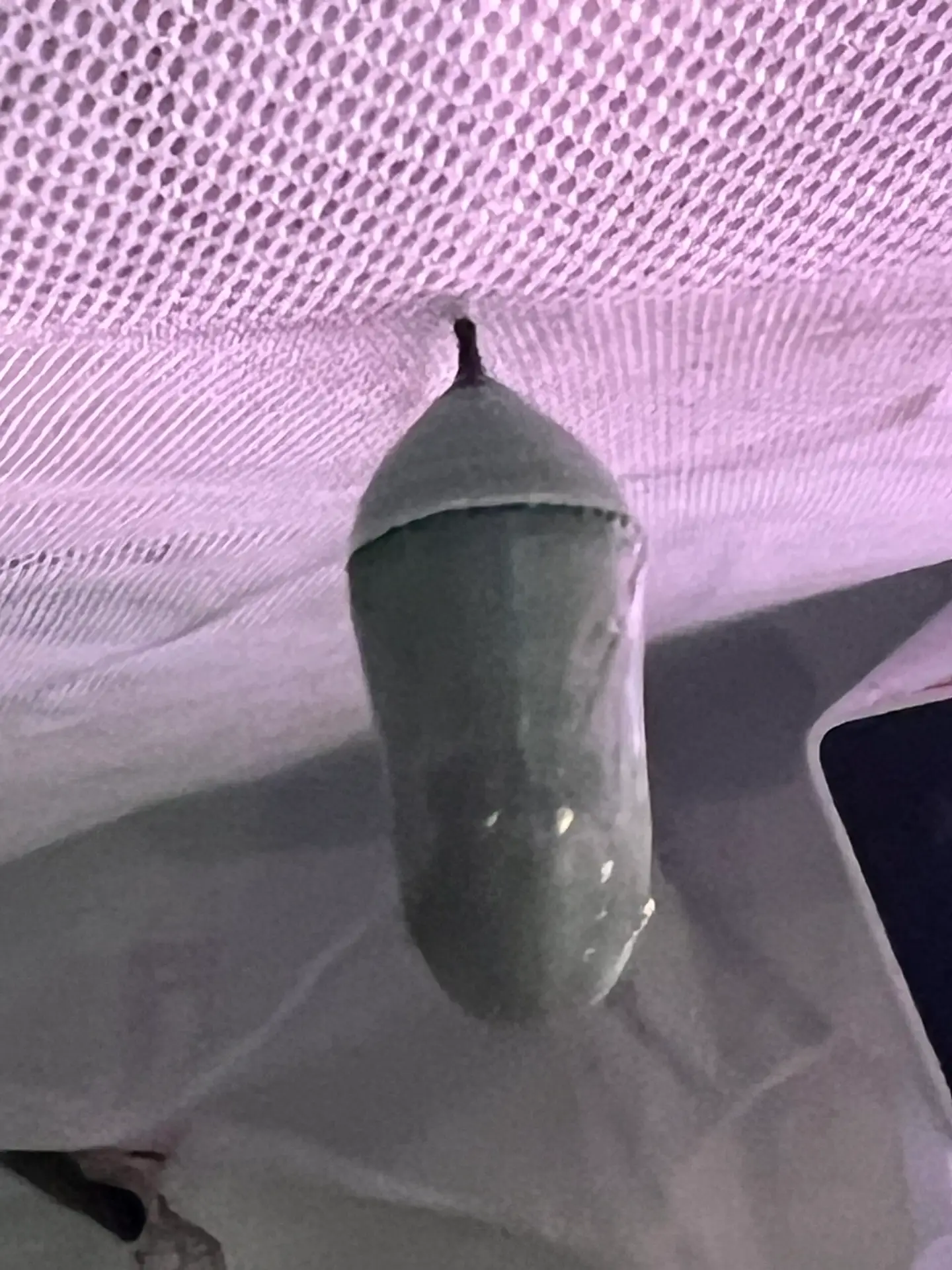
In Habitat Two, the rice-grain caterpillars from that same weekend are no longer caterpillars in the way they were. Several have climbed to the ceiling and spun silk buttons. A few are hanging in J-position, holding still in the unmistakable hook. And a few — the earliest of the early — are already chrysalises, fresh jade on the same screen they were crawling under three days ago.
Same wave. Same habitat. The whole cycle, completing itself in place.
Here is what the weekend looks like from inside the ranch.
The Four That Were Jade
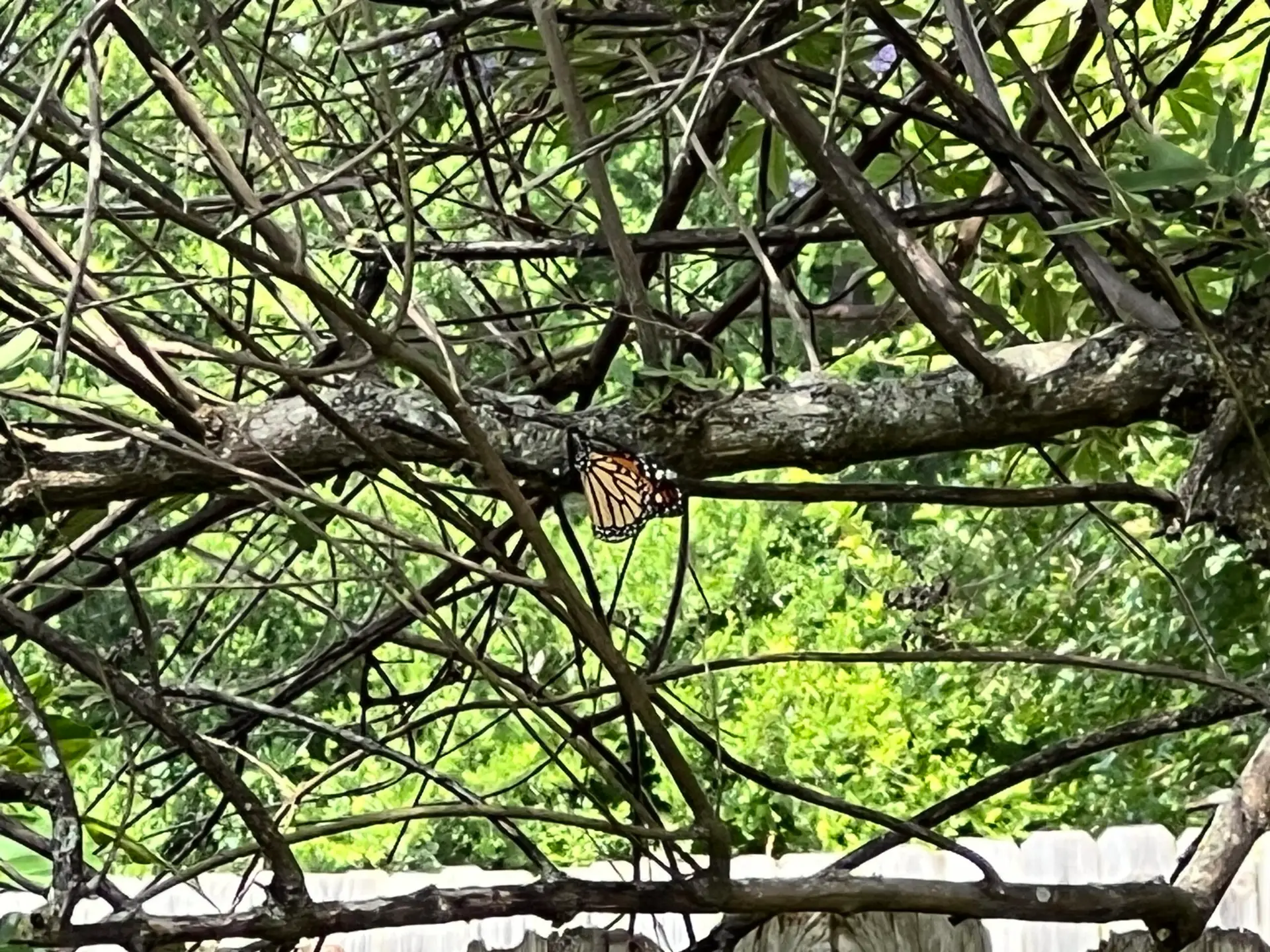
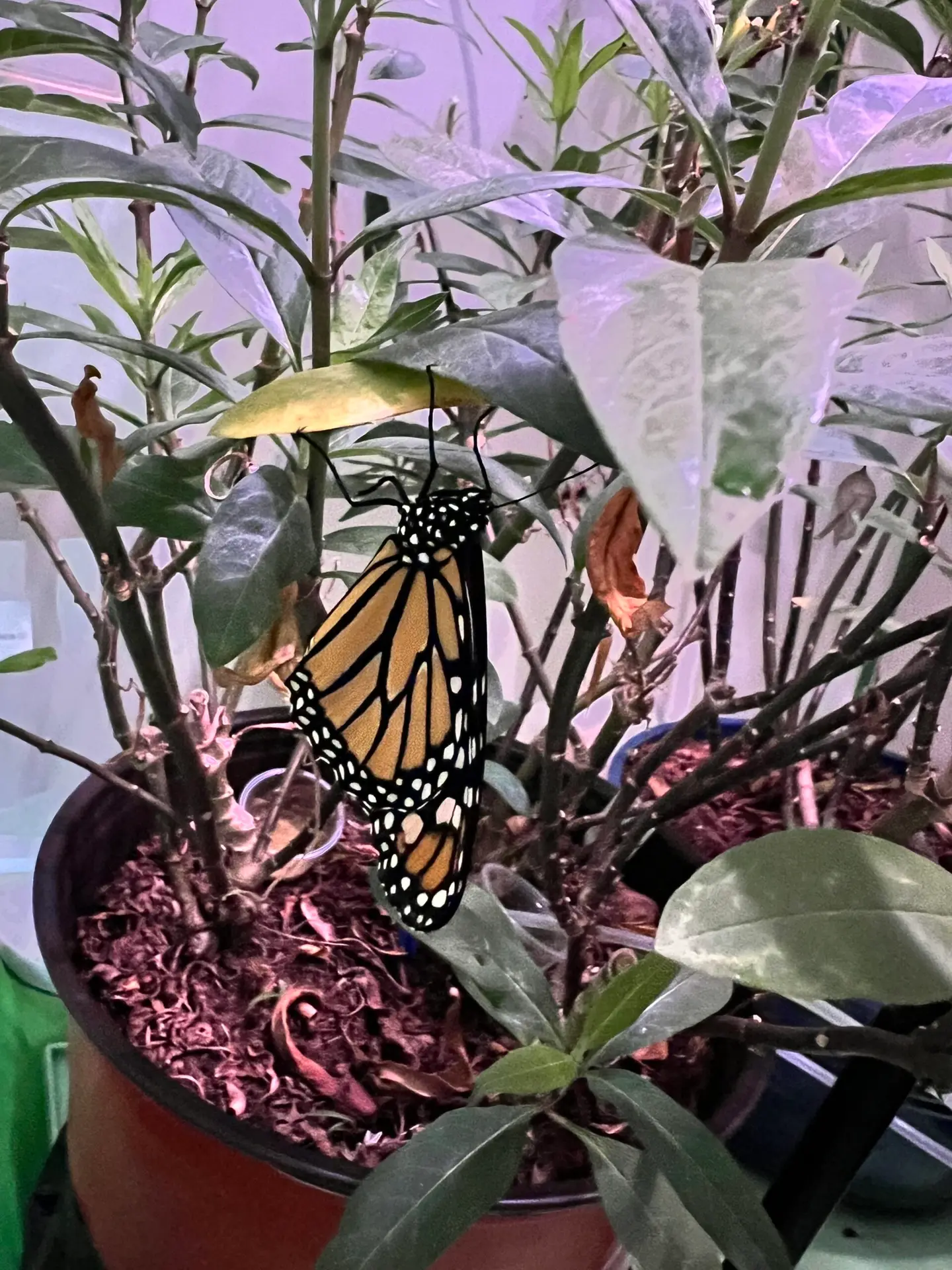
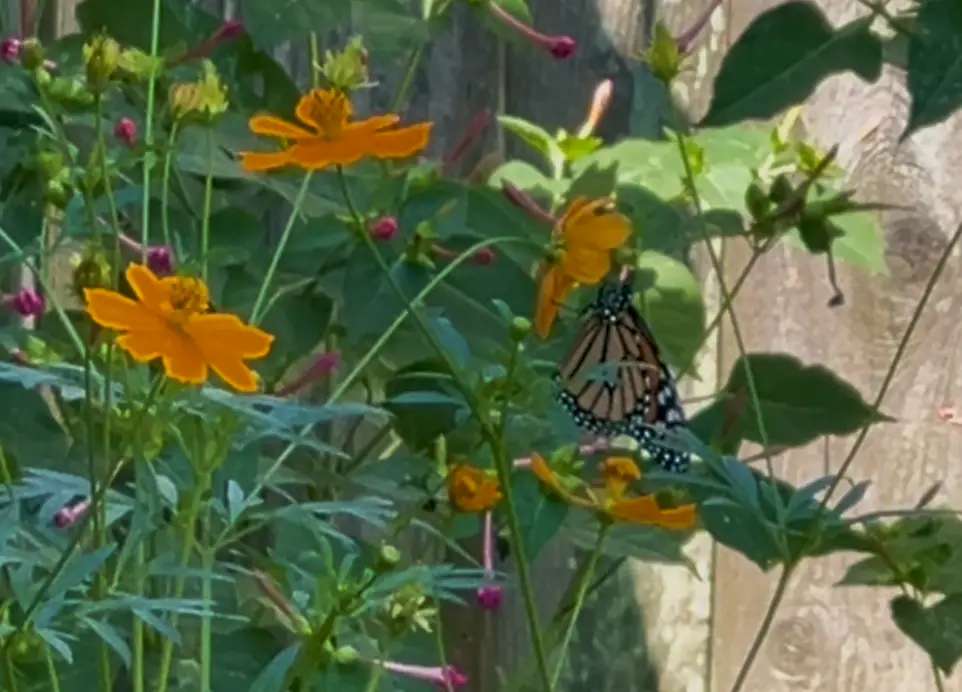
The four butterflies emerged within a couple of mornings of each other, dried their wings on the inside of the screen, and were carried out one at a time to the waystation garden for release. None of them lingered long on the hand. They are out there somewhere now — across the yard, over the neighbor’s roof, headed for whatever nectar source pulled them first.
It is always a strange feeling, the way release works. You spend two weeks watching a chrysalis hang, and then in five minutes the butterfly is somewhere you can no longer see. The garden gets a little quieter. The habitat goes empty.
And then you look up at the ceiling of the next habitat over.
Habitat One: The Deep Clean
An empty habitat is the only time you can really sanitize one. You cannot scrub around a chrysalis. You cannot bleach a screen with a caterpillar crawling on it. So when a habitat clears out, the window opens — and you take it.
The protocol I follow is simple, careful, and unhurried. The screen comes off and gets washed down with a dilute bleach solution, every panel, every corner. The frame gets the same treatment. The floor and any perches inside the habitat get scrubbed and wiped. Everything then gets rinsed thoroughly, because residual bleach is just as bad for caterpillars as the pathogens it is meant to kill. The habitat air-dries in full sun, which finishes what the bleach started.
The reason this step matters so much is that the things you are trying to clean off are not visible. OE spores persist on surfaces for a long time and can move from one wave to the next without you ever knowing they were there. NPV and bacterial issues can compound the same way. A habitat that looks clean to the eye is not necessarily clean to a hatchling caterpillar.
So you scrub the screen you can see, to remove the threats you cannot.
Once it dries, Habitat One sits ready. Empty. Patient. Waiting for whatever wave comes through the waystation garden next.
Habitat Two: Silk Buttons on the Ceiling
While Habitat One gets cleaned, Habitat Two is doing its quiet, important work.
Several late-instar caterpillars have climbed off the milkweed and made their way to the highest point of the habitat — the inside of the screen ceiling. There, one by one, they spin a silk button. The silk button is a small white anchor pad, not much bigger than a fingernail, made of dozens of layers of silk laid down in a deliberate spiral. When the pad is thick enough, the caterpillar grips it with the cremaster at the tail end of its body, lets the rest of its body drop, and hangs upside down.
That hanging shape is the J-position. Head tucked under, body curved into a hook. From the outside, it looks like nothing is happening. Inside, everything is happening. The caterpillar is rearranging itself.
A J-positioned caterpillar will hang there for about eighteen to twenty-four hours. Then the skin splits behind the head and slides up the body in just a few minutes, revealing the chrysalis underneath — bright green, soft at first, hardening within an hour into the jade lantern shape we all recognize. This is the pupation event, and it is one of the most surprising things you can witness in the whole life cycle. If you ever get to see one happen in real time, slow down and watch. It is fast, alien, and beautiful.
Right now, the ceiling of Habitat Two has every stage of the wave on it at once. A few caterpillars are still feeding on the potted milkweed below, drawing water from the self-watering reservoir without any help from me. Silk buttons are being spun on the screen above them. A J-positioned caterpillar is holding still off to one side. And the first finished chrysalises hang exactly where their caterpillars chose to stop.
Why the Chrysalises Stay Where They Hang
There is a philosophy that runs through everything I do at the ranch, and it is the same philosophy that runs through Rescue, Raise, & Release: no interference unless interference is necessary.
That principle shows up most clearly at the chrysalis stage. A caterpillar that climbs to the ceiling, spins a silk button, and forms a chrysalis there has chosen its spot. It has weighed the position with whatever instincts a caterpillar has, and that spot is the answer it arrived at. The wrangler’s job at that point is not to move it. The wrangler’s job is to let the cycle finish where the caterpillar decided it should finish.
So I do not relocate chrysalises out of preference, or out of convenience, or to make a habitat look tidier. The full cycle — egg, caterpillar, chrysalis, butterfly, release — runs in a single habitat from start to finish whenever it can. Only when necessity demands it do I intervene: a fallen chrysalis, a poorly placed one, a contamination risk. Otherwise, the chrysalis stays exactly where it formed, and the butterfly emerges from the same screen the egg was laid under.
The cleaning of Habitat One, then, is not preparation for moving anything. It is the ranch holding a second habitat ready for whatever comes next — a new round of rescued eggs or early-instar caterpillars from the waystation garden, raised from the start in a habitat that is clean and ready for them.
The Sun Inside, Still Running
The programmed LED day kept the four released butterflies on schedule through emergence — sunrise at seven, full midday by ten, sunset starting at five. The same schedule is now keeping the silk-spinners on theirs. The light comes up the same way every morning whether the habitat holds a caterpillar, a J, a chrysalis, or nothing at all. Consistency is the whole point.
The Wrangler’s Job This Weekend
Two routines, side by side.
In Habitat One (empty):
- Full clean and disinfect — screen, frame, floor, perches.
- Dilute bleach, thorough rinse, sun-dry.
- Inspect when dry.
- Set aside, ready, for the next wave whenever it arrives.
In Habitat Two (active):
- Leave the silk-spinners and J’s completely alone. No screen contact. No jostling.
- Fresh potted milkweed for the few late-instar caterpillars still feeding.
- Watch the J’s for the skin-split that signals pupation.
- Watch the new chrysalises harden in place.
- Do not move them.
For the Reader at Home
If you are raising monarchs in your own habitat and one of your caterpillars has climbed up and stopped moving, look closely at the spot where it is hanging. If you see a small white pad above the cremaster, that is the silk button. The caterpillar is anchoring itself. If the body has curled into a hook shape, that is the J-position. The pupation event is coming, probably within a day.
If you find a caterpillar in J-position on your back porch, your fence rail, or the underside of your patio furniture, do not move it. It chose that spot for a reason. Stand back, take a photo if you want, and let it work.
A J-positioned caterpillar can look almost dead. It is not. It is closer to becoming a butterfly than at any other moment in its life.
Closing the Day
Standing between the two habitats this weekend, the feeling is different than it was a week ago. A week ago, the contrast was loud — silence on one side, motion on the other. This weekend, the contrast is sequential. One wave finished and went into the garden. The next wave is finishing right now, on the ceiling of Habitat Two, where it began as an egg. One habitat is being cleaned for what comes next. The other is letting the wheel turn through its final stage exactly where it started.
Same ranch. Same season. The cycle completing itself in place.
If you are raising monarchs at home this season, tag your habitat photos #MonarchButterflyWrangler. I would love to see your silk buttons.
Flutter and Float with the Monarchs.
“Wrangle the Wonders.”